
ReStyle
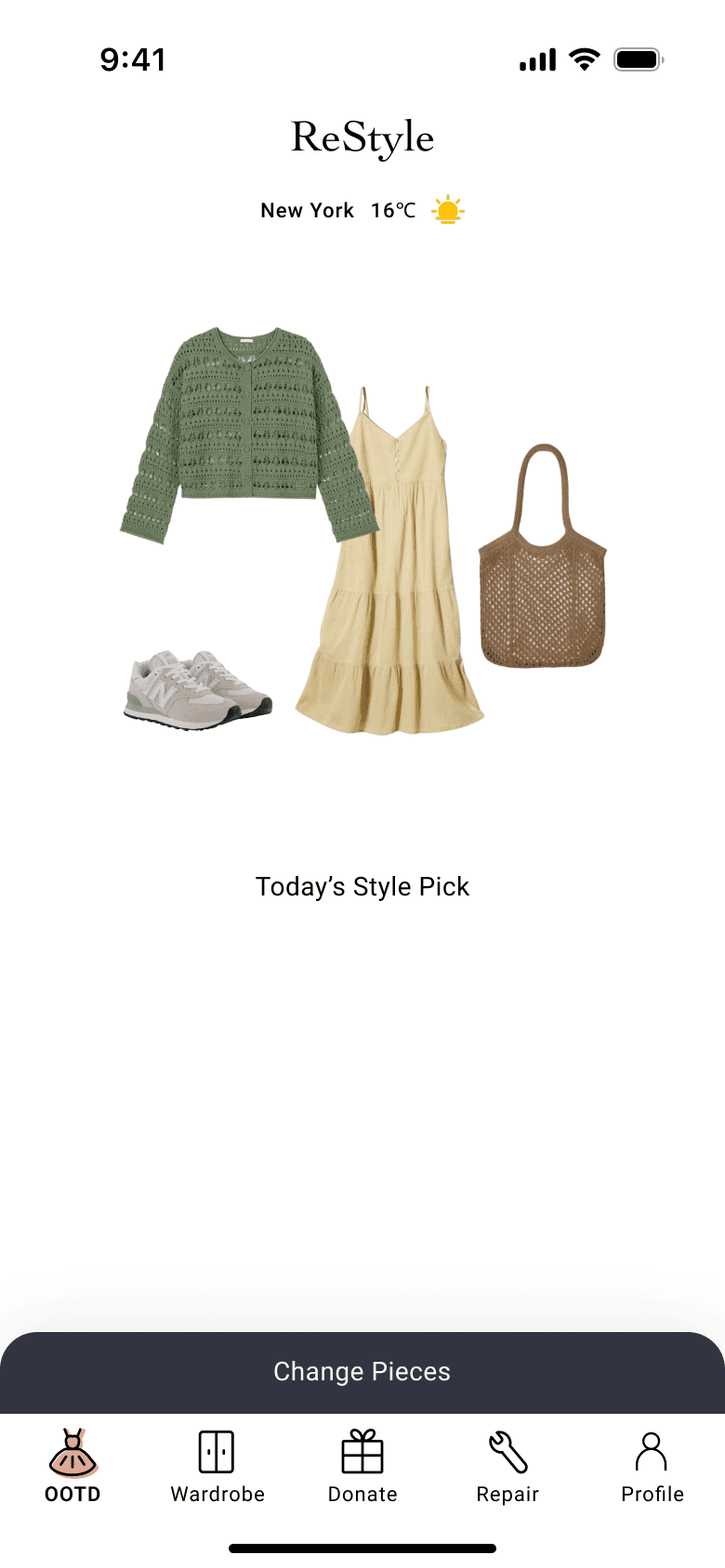
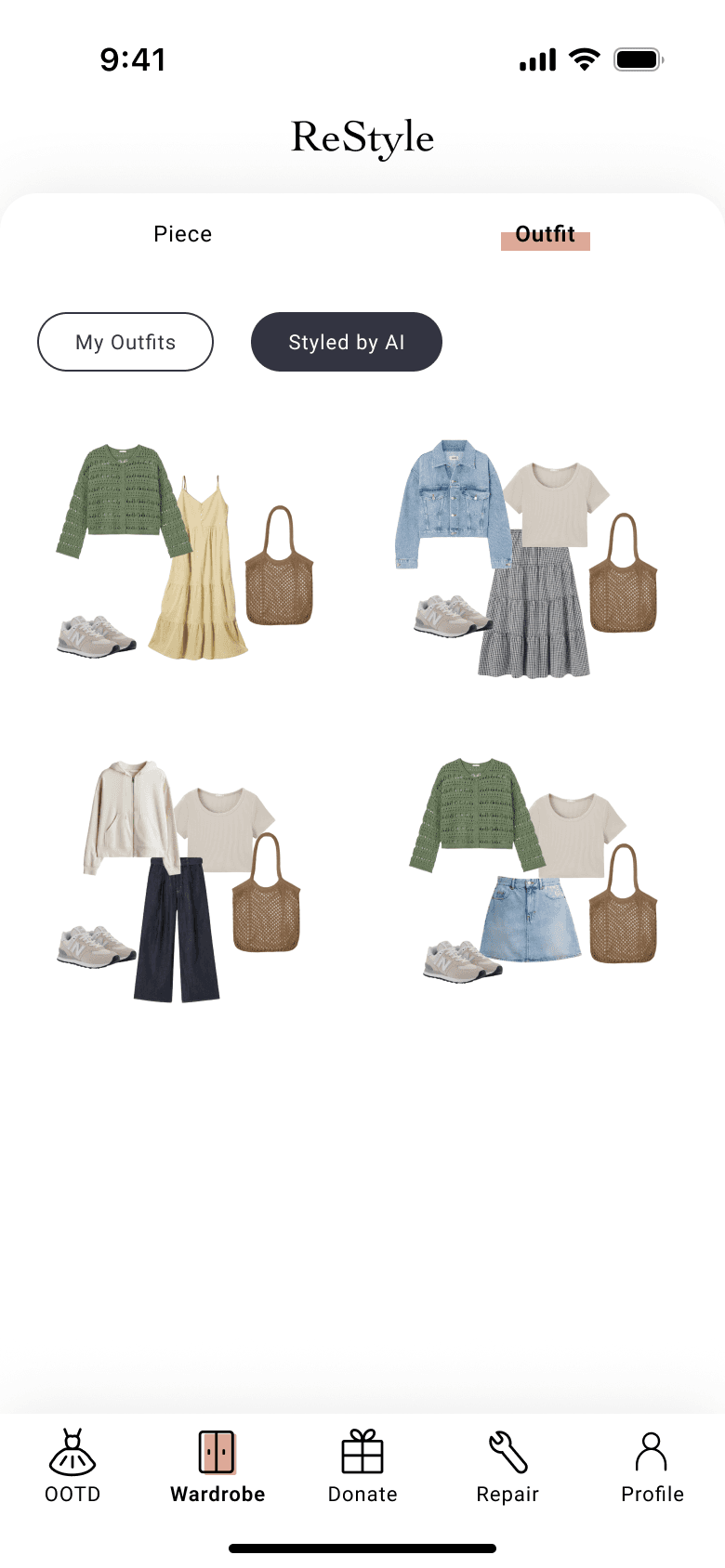
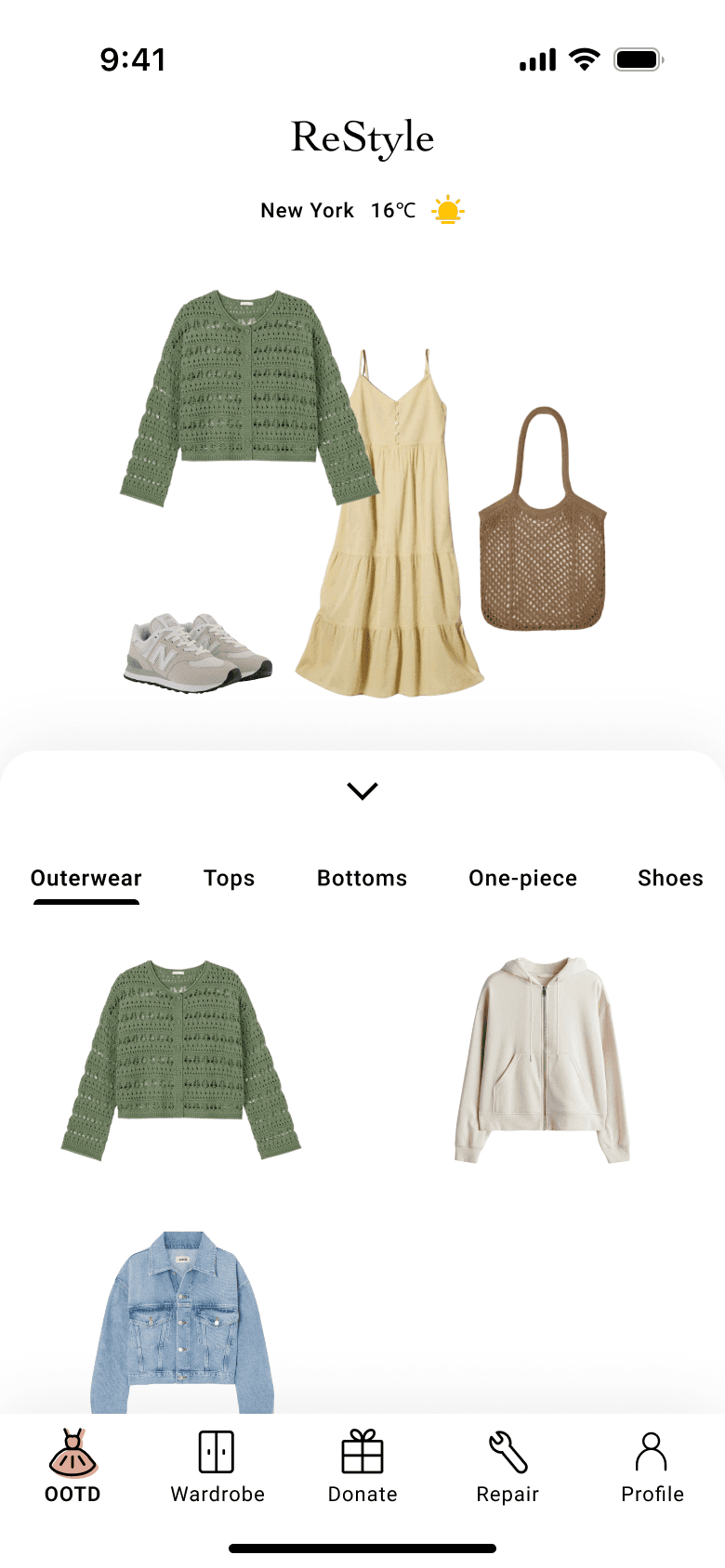
ReStyle
A smarter wardrobe for more sustainable habits.
Problem
Sustainable intentions do not always become everyday habits.
People care about sustainability—but their shopping habits don’t always reflect those values.
Fast fashion makes buying new clothes cheap, convenient, and exciting, while sustainable alternatives often require more effort. Clothes are frequently forgotten, barely worn, or discarded simply because people don’t know what else to do with them.
Research
An attitude–behavior gap shapes clothing decisions.
Three Barriers to Sustainable Habits
My research revealed a clear attitude–behavior gap. Consumers may want to shop more sustainably, but three major barriers get in the way:
Convenience
Buying or throwing away clothing is often easier than repairing, reselling, or donating it.
Lack of Awareness
People forget what they already own or don’t know where to donate and recycle unwanted clothes.
The Desire for Novelty
Trends, social media, and FOMO continuously encourage people to look for something new.
Reframing the Problem
Rather than focusing on stopping people from shopping, I shifted the focus toward helping people rediscover value in the clothes they already own.
Competitive Analysis
Exploring the Gap Between Wardrobe Management and Sustainability
I analyzed five fashion and wardrobe platforms to understand how they support clothing reuse, outfit planning, and sustainable habits.
Platforms like Rent the Runway, Patagonia Worn Wear, and Poshmark focus on specific actions such as renting, repairing, or reselling. Meanwhile, Indyx and Whering focus on wardrobe organization and outfit planning.
Feature Comparison
| Feature | Rent the Runway | Patagonia Worn Wear | Poshmark | Indyx | Whering |
|---|---|---|---|---|---|
| Weather-based outfit suggestions | — | — | — | — | — |
| Upload photo to auto-detect clothing | — | — | — | ✓ | ✓ |
| AI-powered outfit recommendations | — | — | — | ✓ | ✓ |
| One-click resale listing | — | — | ✓ | — | — |
| Clothing care & repair tutorials | — | ✓ | — | — | — |
| Donation info & map | — | — | — | — | ✓ |
| Eco impact tracking | — | — | — | — | — |
| Gamified reward system | — | — | — | — | — |
A Closer Look at Digital Wardrobe Apps
Indyx
A digital wardrobe platform focused on closet organization, outfit planning, and styling.
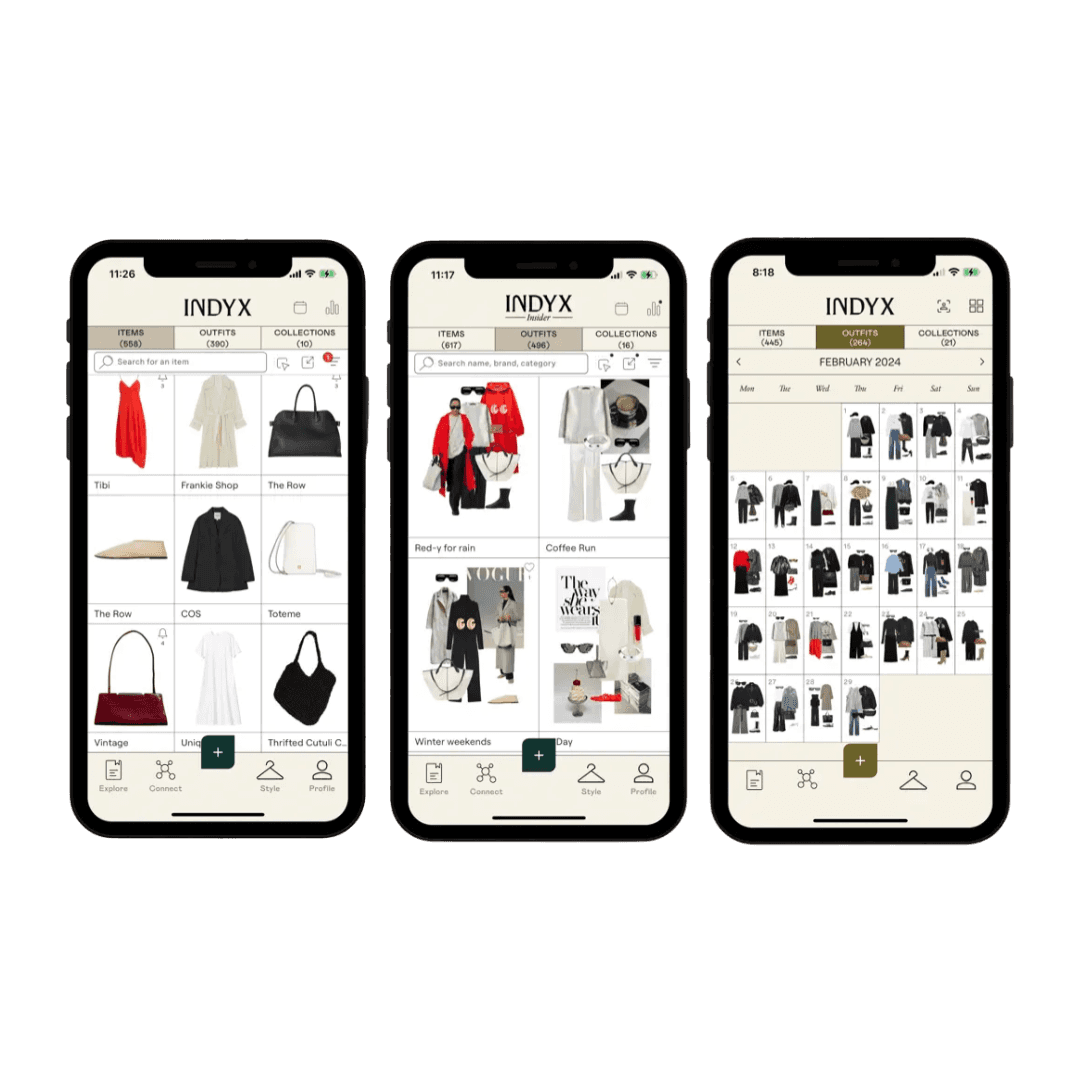
Whering
A wardrobe app that helps users digitize their closet, create outfits, and explore new combinations.
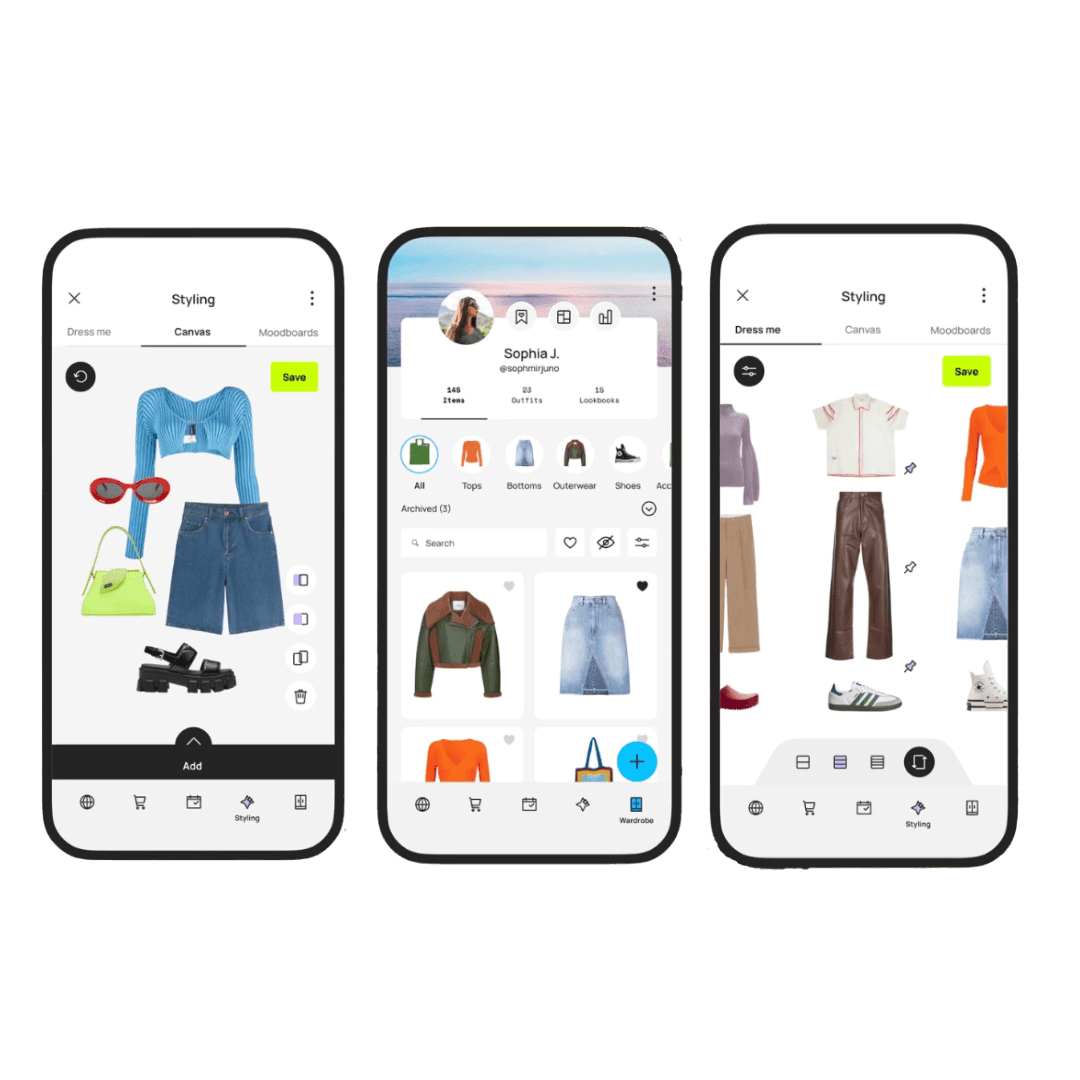
Both make wardrobe organization easier, but their experiences mainly focus on cataloging and styling. They offer fewer features that encourage users to repair, resell, donate, or track the impact of their clothing choices over time.
Key Insight
Most existing platforms focus on either wardrobe management or individual sustainable actions, but rarely connect the two.
Opportunity
How might we turn wardrobe organization into more sustainable everyday actions?
ReStyle aims to bridge the gap between wardrobe management and sustainable habits by encouraging users to restyle, repair, resell, and donate the clothes they already own.
Design Strategy
Turning Everyday Choices Into Sustainable Habits
Persuasive Design
Rather than asking users to drastically change their shopping habits, I focused on helping them make more sustainable choices with the clothes they already own.
Guided by my research and Fogg's Behavior Model, I developed three design strategies to make these actions easier and more rewarding.
Reduce Effort
Make sustainable actions easier and require less effort.
- AI Detection
- One-Click Resale
- Donation Finder
Change Mental Models
Help users see more value in what they own.
- AI Outfit Suggestions
- Weather-Based Outfits
Support Better Decisions
Give users the information, feedback, and motivation they need to make more sustainable choices.
- Repair Tutorials
- Impact Tracking
- Rewards
Final Design
A Smarter Wardrobe for Sustainable Living
ReStyle helps users buy less, reuse more, and make sustainable choices by combining outfit inspiration, wardrobe management, resale, repair, and donation in one app.
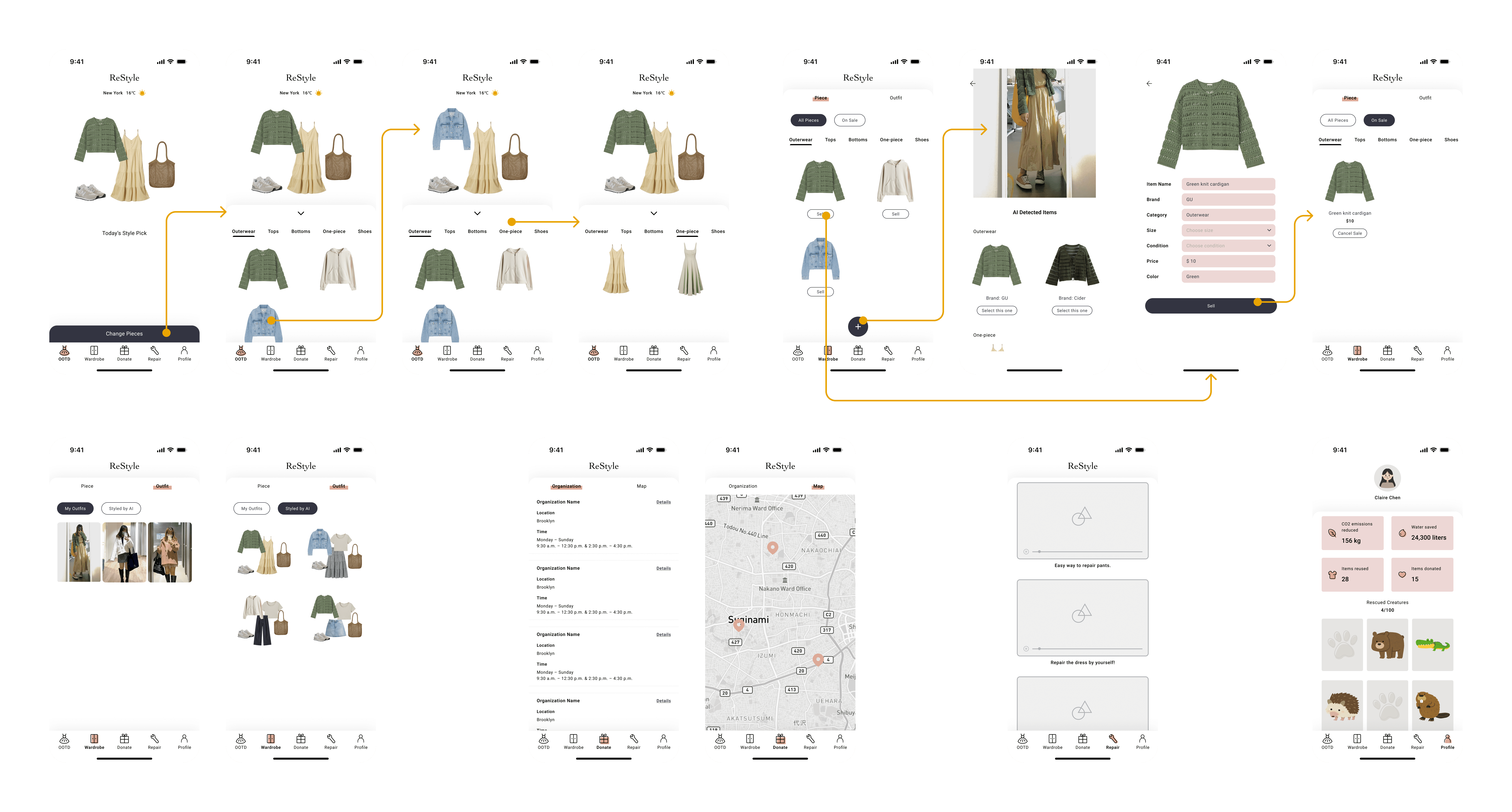
App Flow
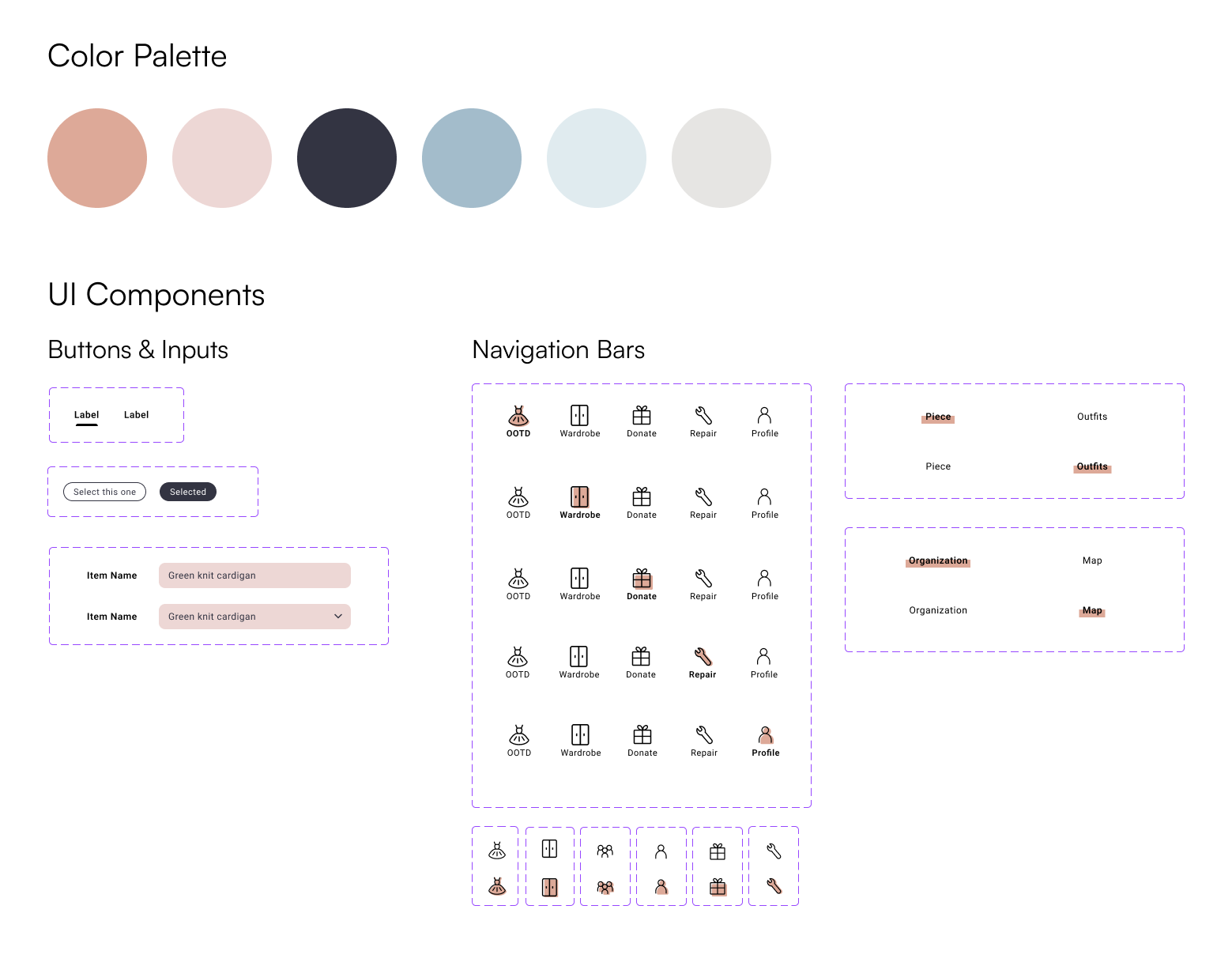
Design System
Key Features
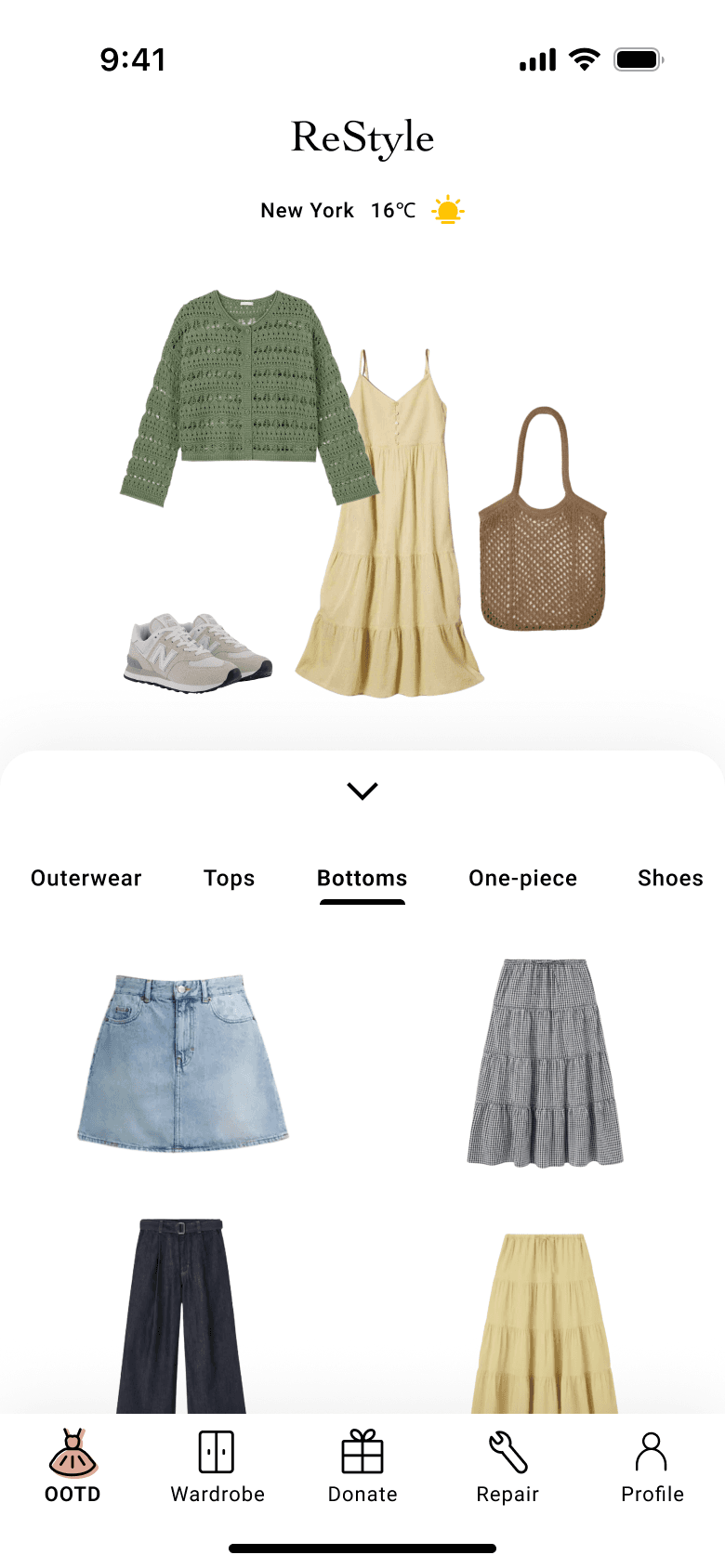
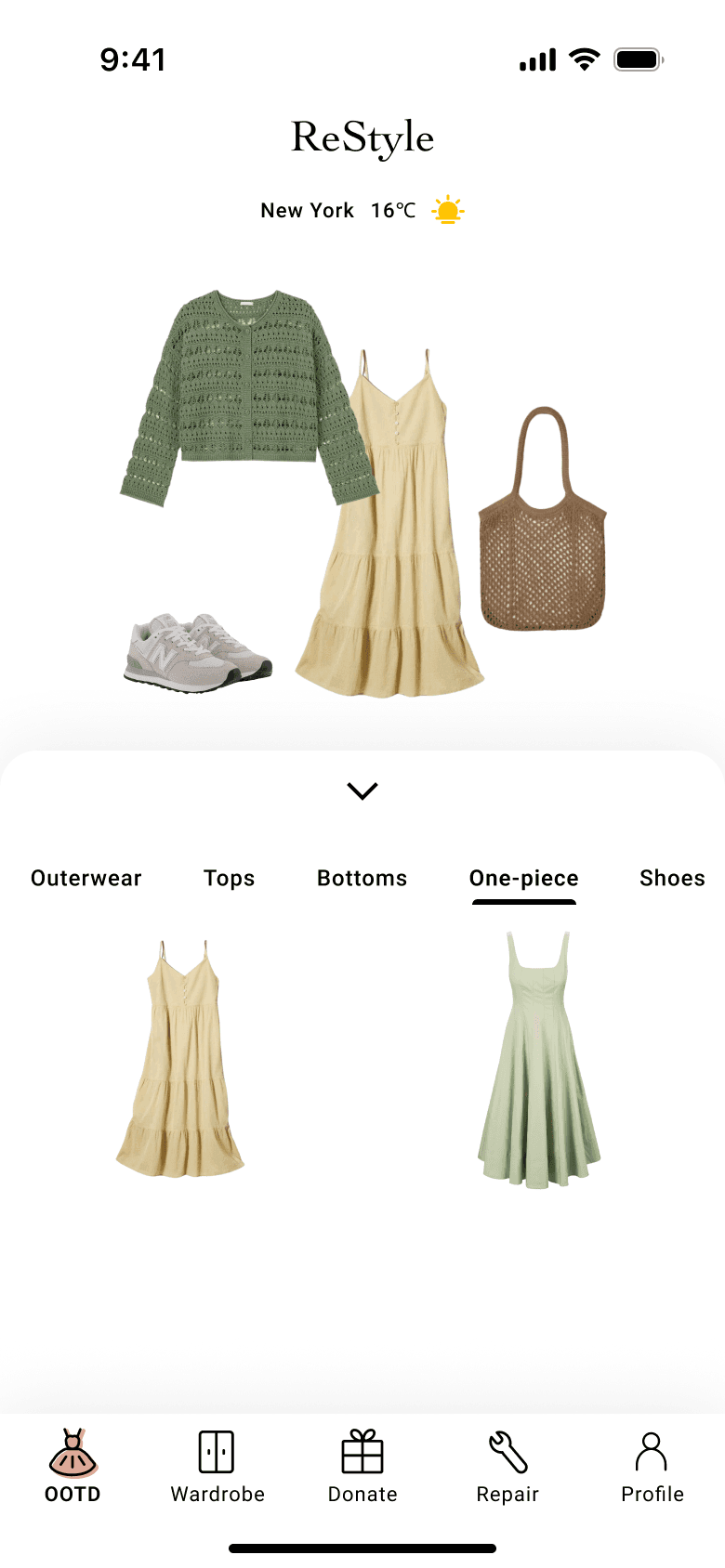
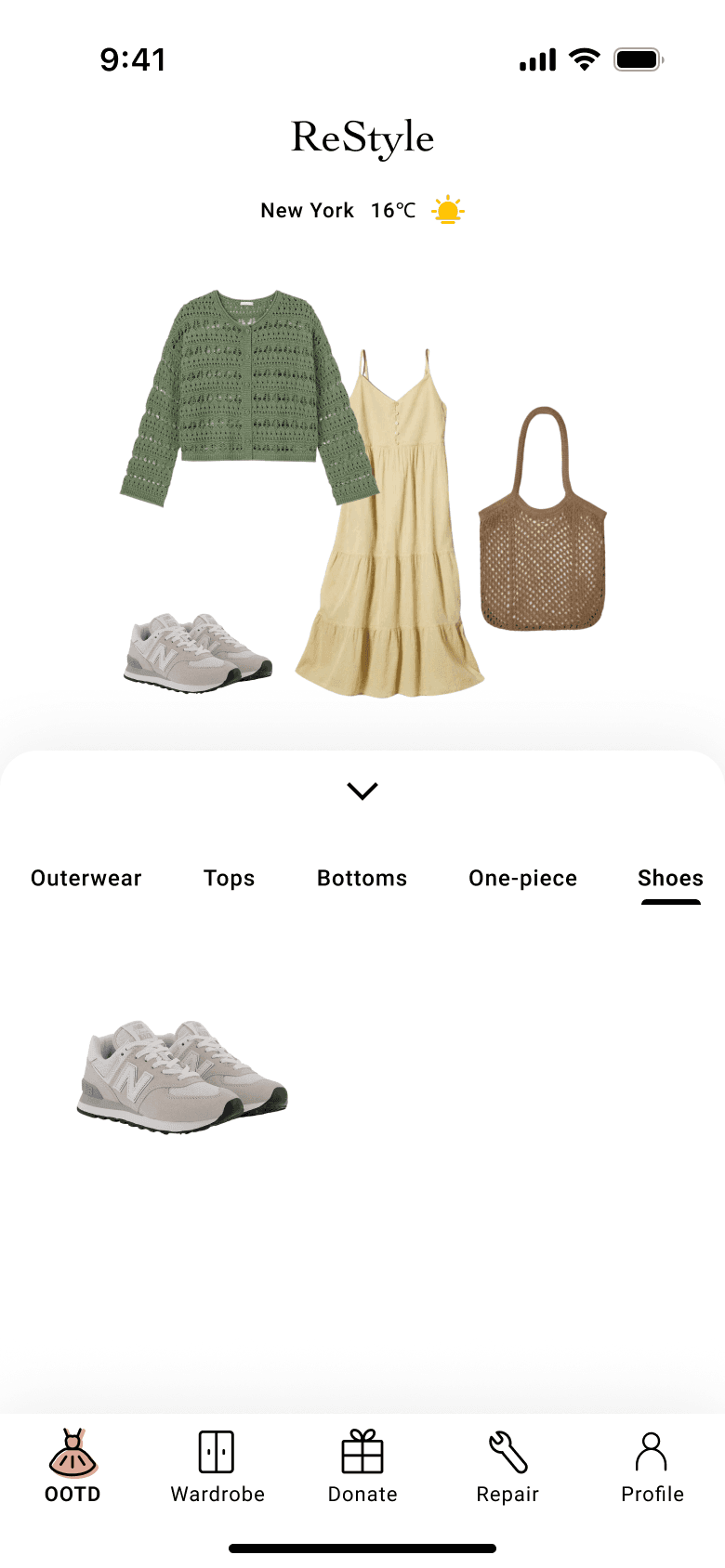
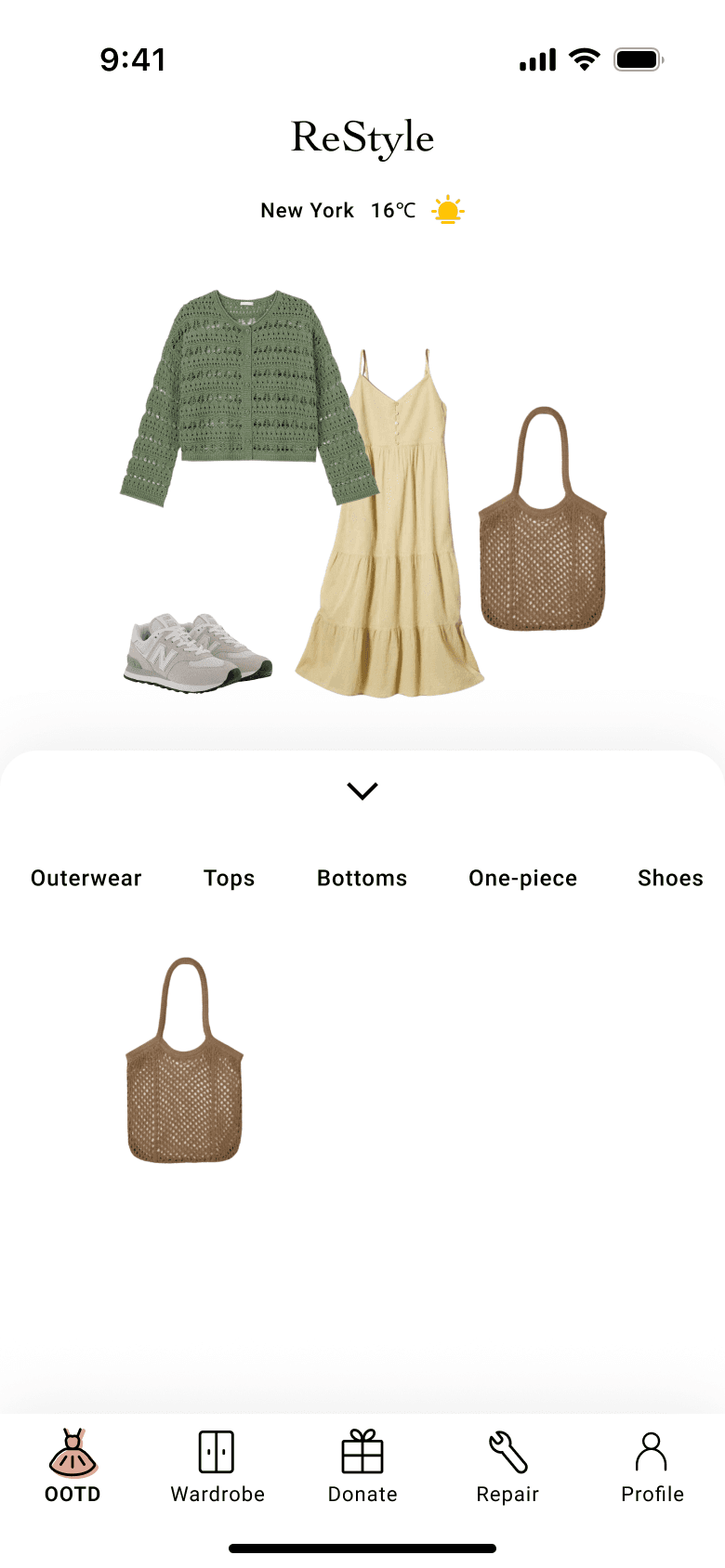
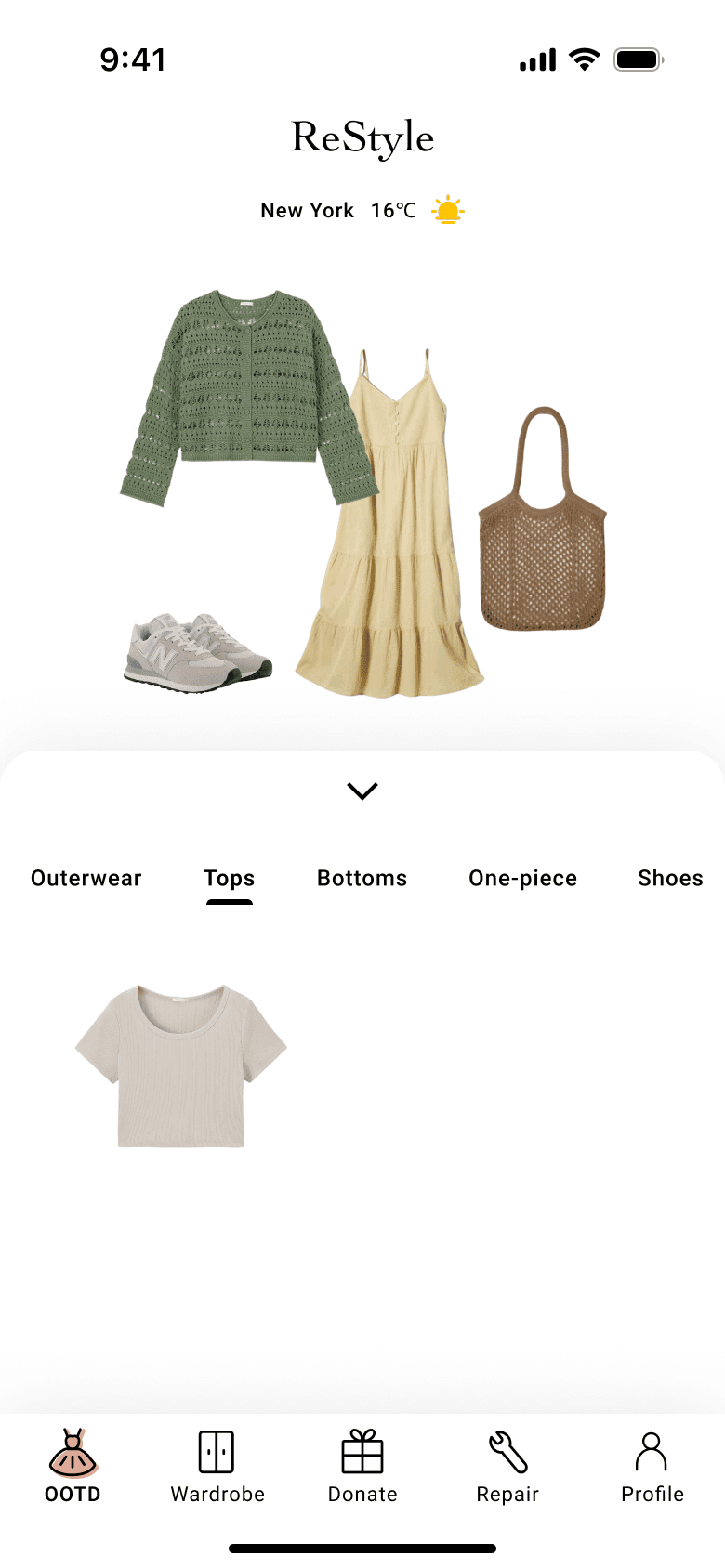
01 - Restyle What You Own
Find something new without buying something new
ReStyle recommends daily outfits based on the weather and lets users swap individual pieces using clothes already in their wardrobe.
Why it matters
It gives users more variety without requiring another purchase.
02 - Build Your Wardrobe with Less Effort
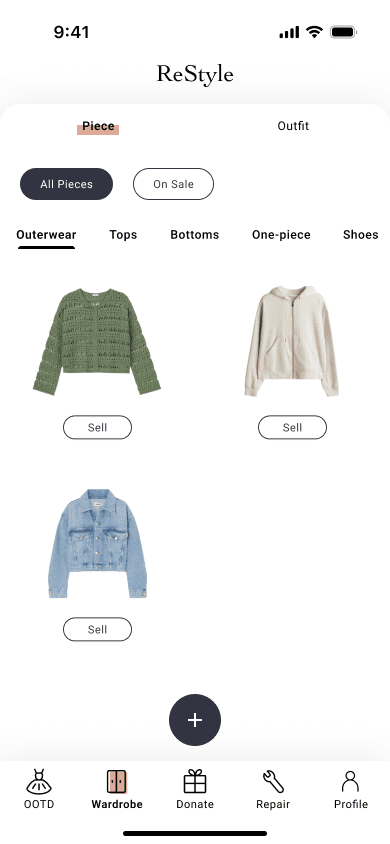
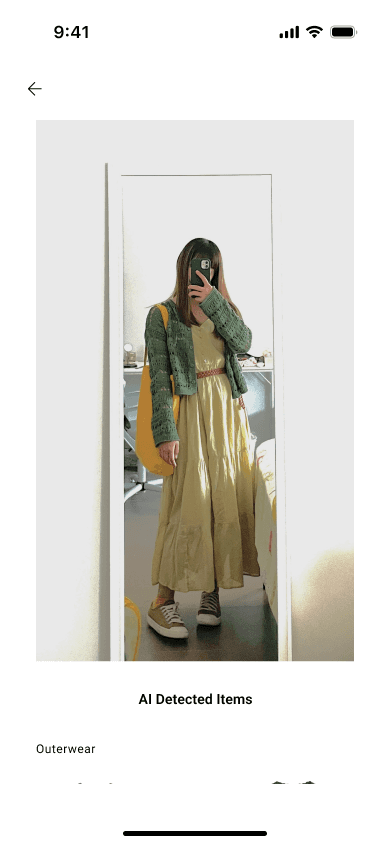
Upload one outfit. Let AI do the rest
Instead of adding clothes one by one, users can upload a daily outfit photo. ReStyle automatically detects individual items and adds them to their digital wardrobe.
Why it matters
Less manual work makes it easier for users to gradually build and maintain their wardrobe.
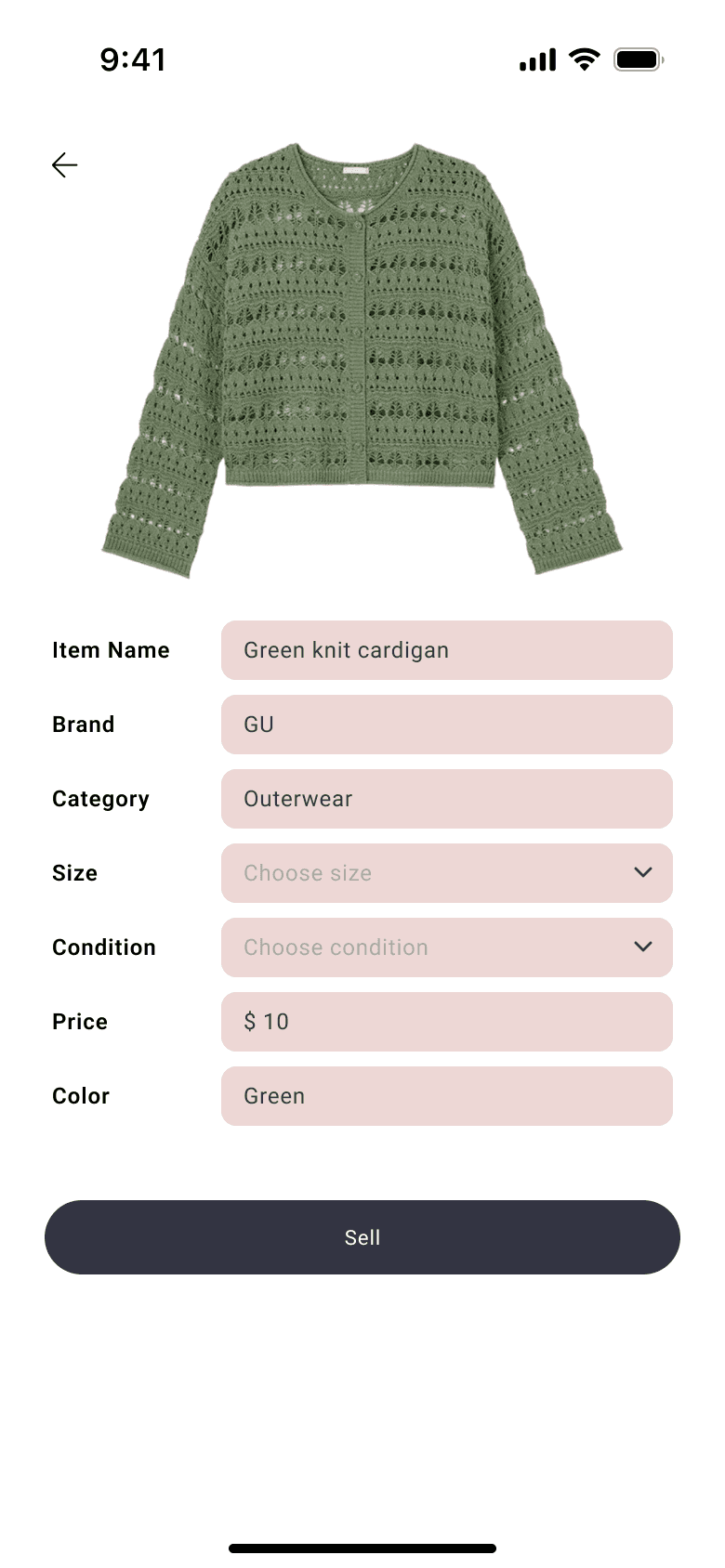
03 - Resell in One Tap
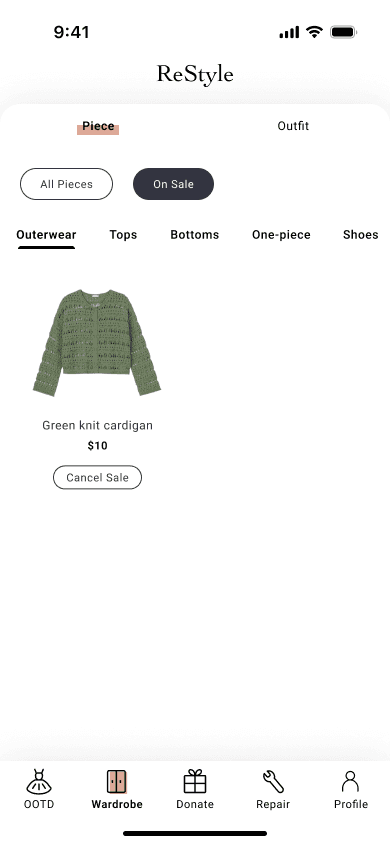
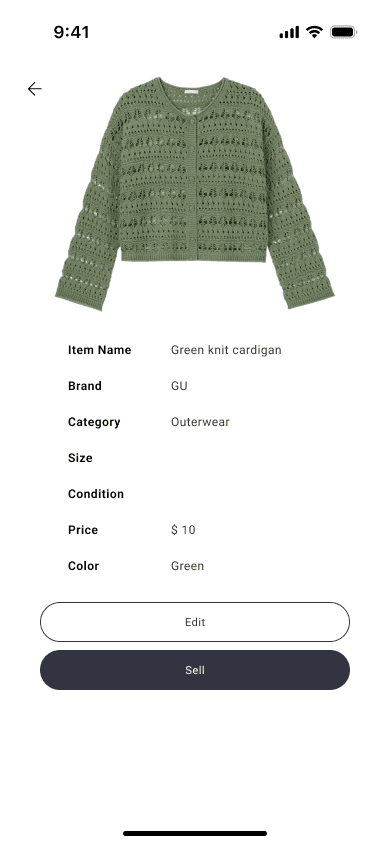
Give unused clothes a second life
Users can list an item directly from their wardrobe, with most item details already filled in.
Why it matters
Reducing the effort required to resell makes it more likely that users will pass clothes on instead of leaving them unused.
04 - Discover New Outfit Combinations
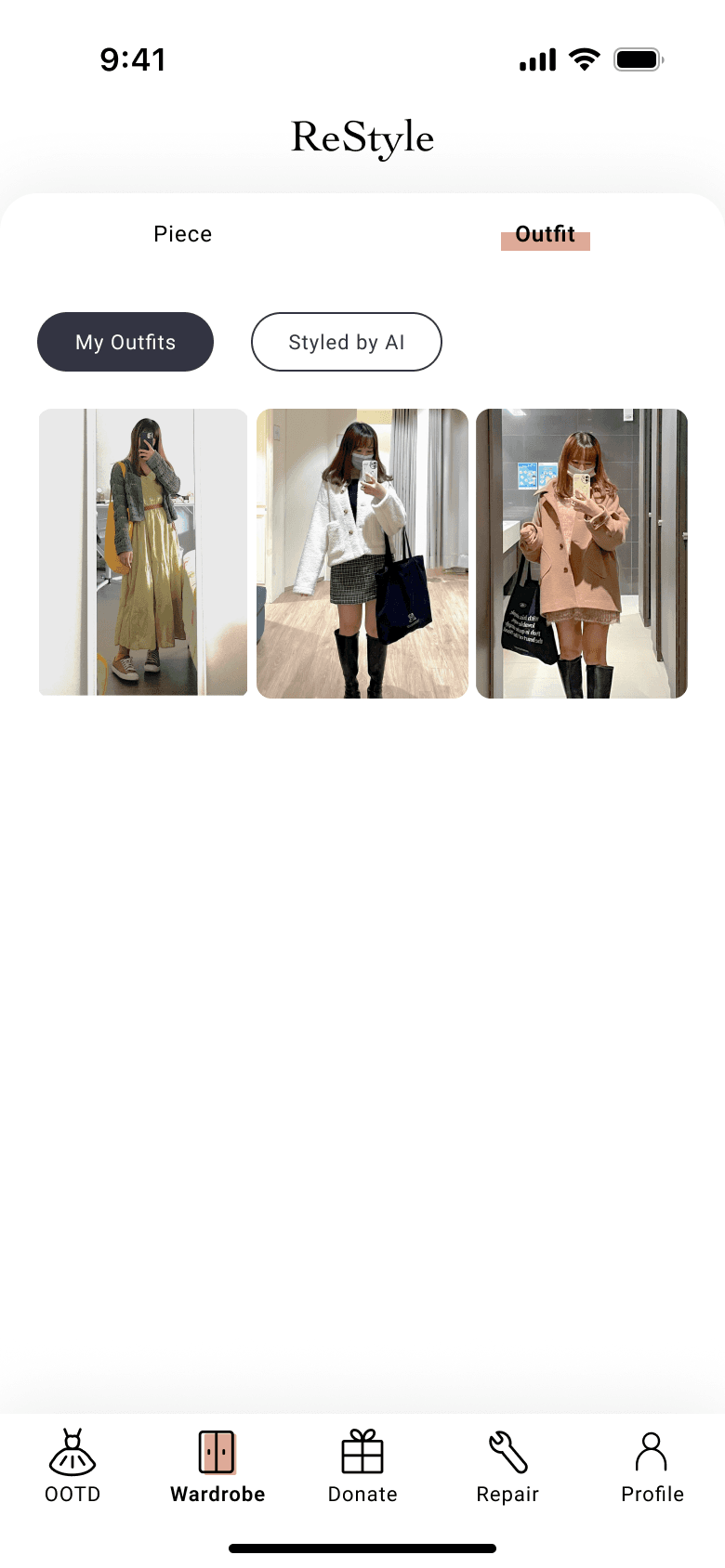
See more possibilities in what you already own
AI-generated outfit ideas help users explore new combinations using clothes already in their wardrobe.
Why it matters
It helps satisfy the desire for novelty without encouraging another purchase.
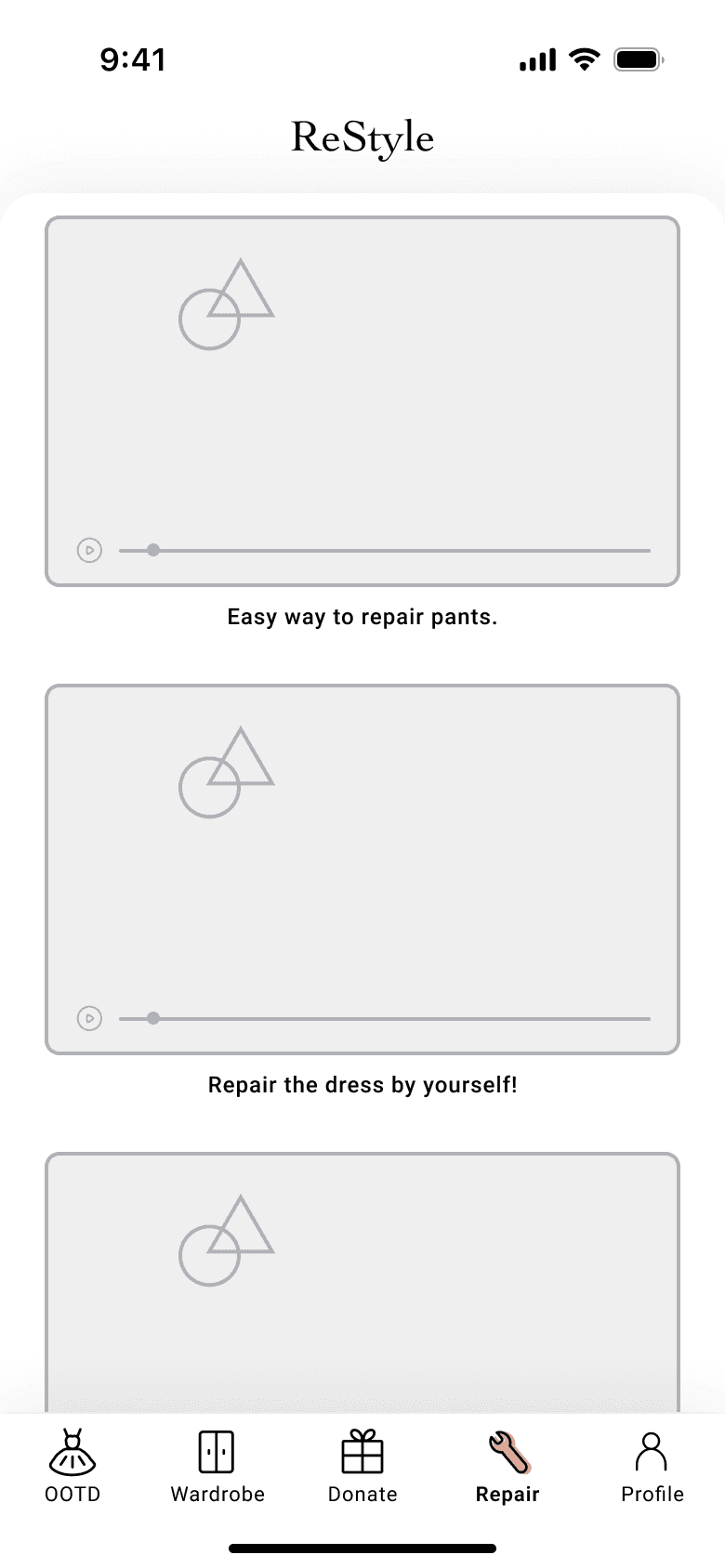
05 - Repair or Donate Instead of Discarding
Make the sustainable next step easier
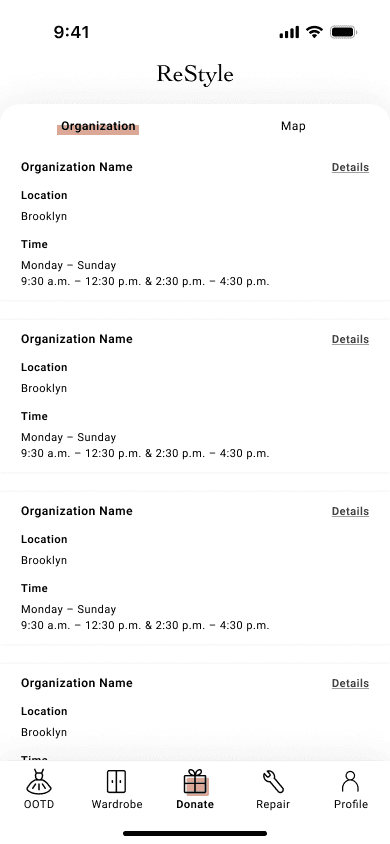
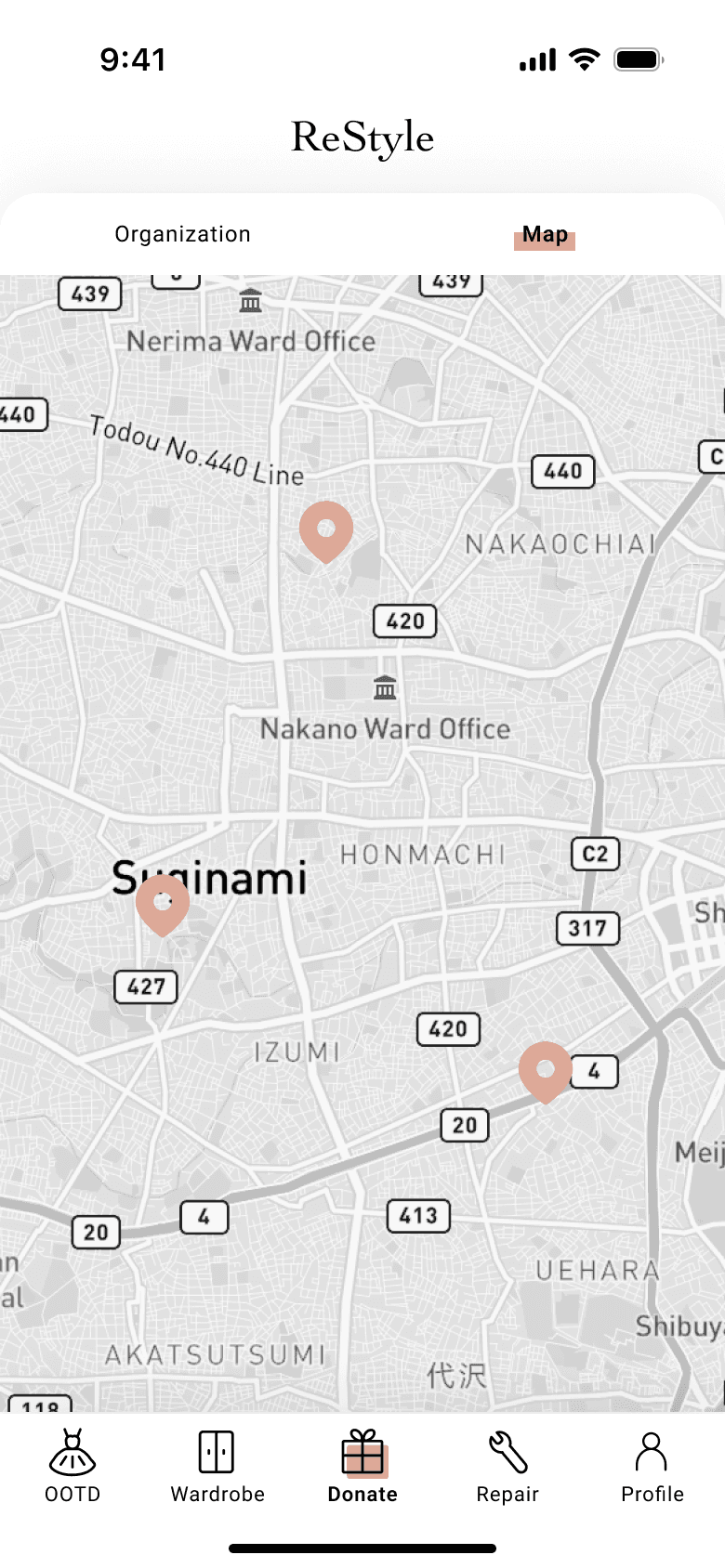
Repair tutorials help users care for and extend the life of their clothes, while donation information helps them find nearby places to give away unwanted items.
Why it matters
Users get clear alternatives before throwing clothing away.
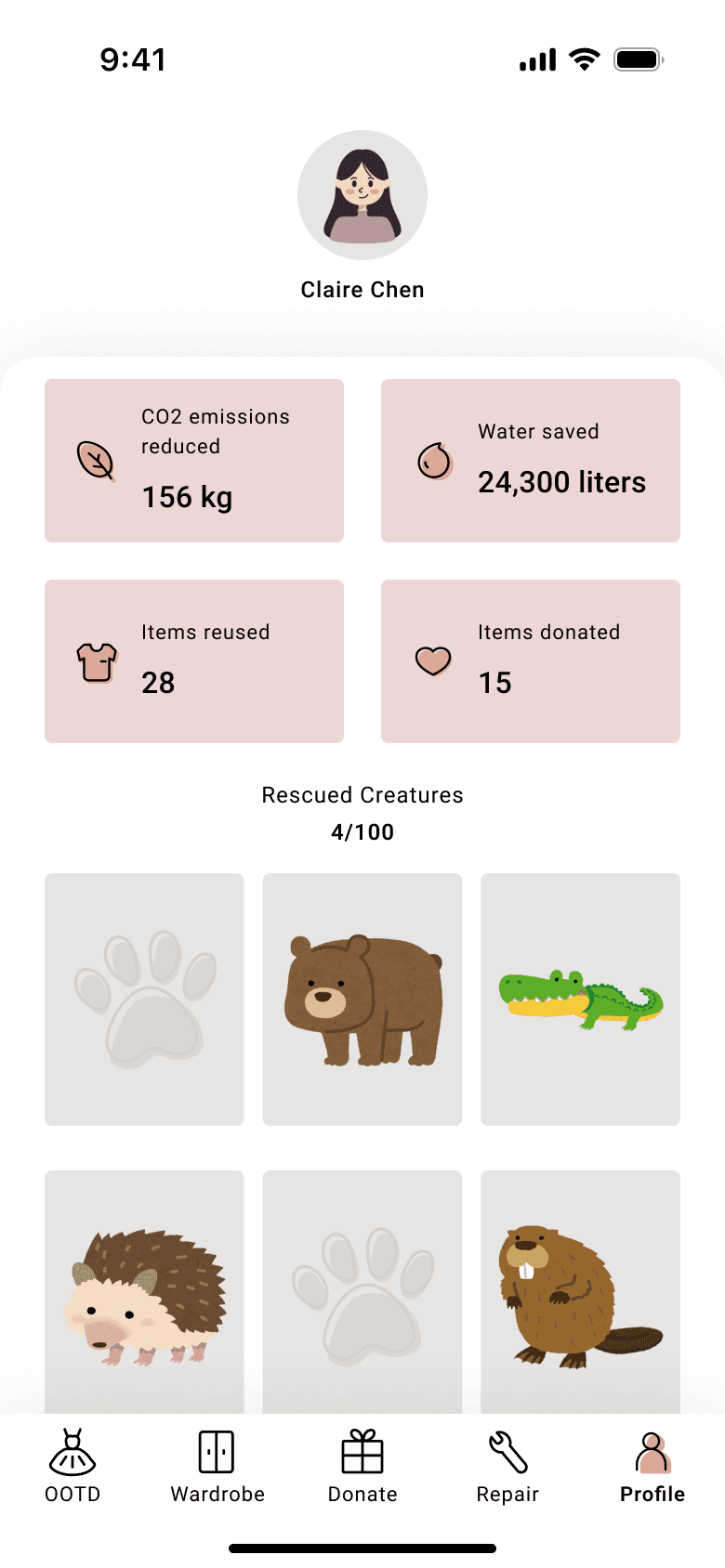
06 - See Your Impact
Make progress visible
ReStyle tracks CO₂ reduced, water saved, and items reused or donated. Users can also unlock collectible animal cards through sustainable actions.
Why it matters
Visible progress and rewards help motivate users to keep building better habits.
Takeaway
Designing for Behavior Change
Through ReStyle, I learned how to apply behavioral design principles to encourage more sustainable habits. By reducing friction, providing timely support, and making progress visible, I explored how small design decisions can help turn intentions into everyday actions.
AI Should Reduce Effort
I also learned that AI is most valuable when it simplifies everyday tasks, like cataloging clothes, rather than becoming the focus of the experience.