
Momento
Momento
A personal home for collections and the memories they hold.
Motivation
Collectibles are more than items. They are memories.
I noticed that many adults collect toys, dolls, and models for emotional comfort and personal meaning. From plush toys and LEGO to character figures, these collections often hold stories that go far beyond the objects themselves.
Momento explores a dedicated space where collectors can document their collections, share with people they choose, and preserve an item’s story when it passes to a new owner.
Emotional Value
Objects can carry comfort, memories, and a sense of personal identity.
A Community of Collectors
Adults connect through shared interests in toys, characters, and collecting.
Research
Understanding the people behind the collections.
Primary Research
I combined interviews, an online survey, and social media observation to understand how adults collect, share, and trade meaningful items.
3 Interviews
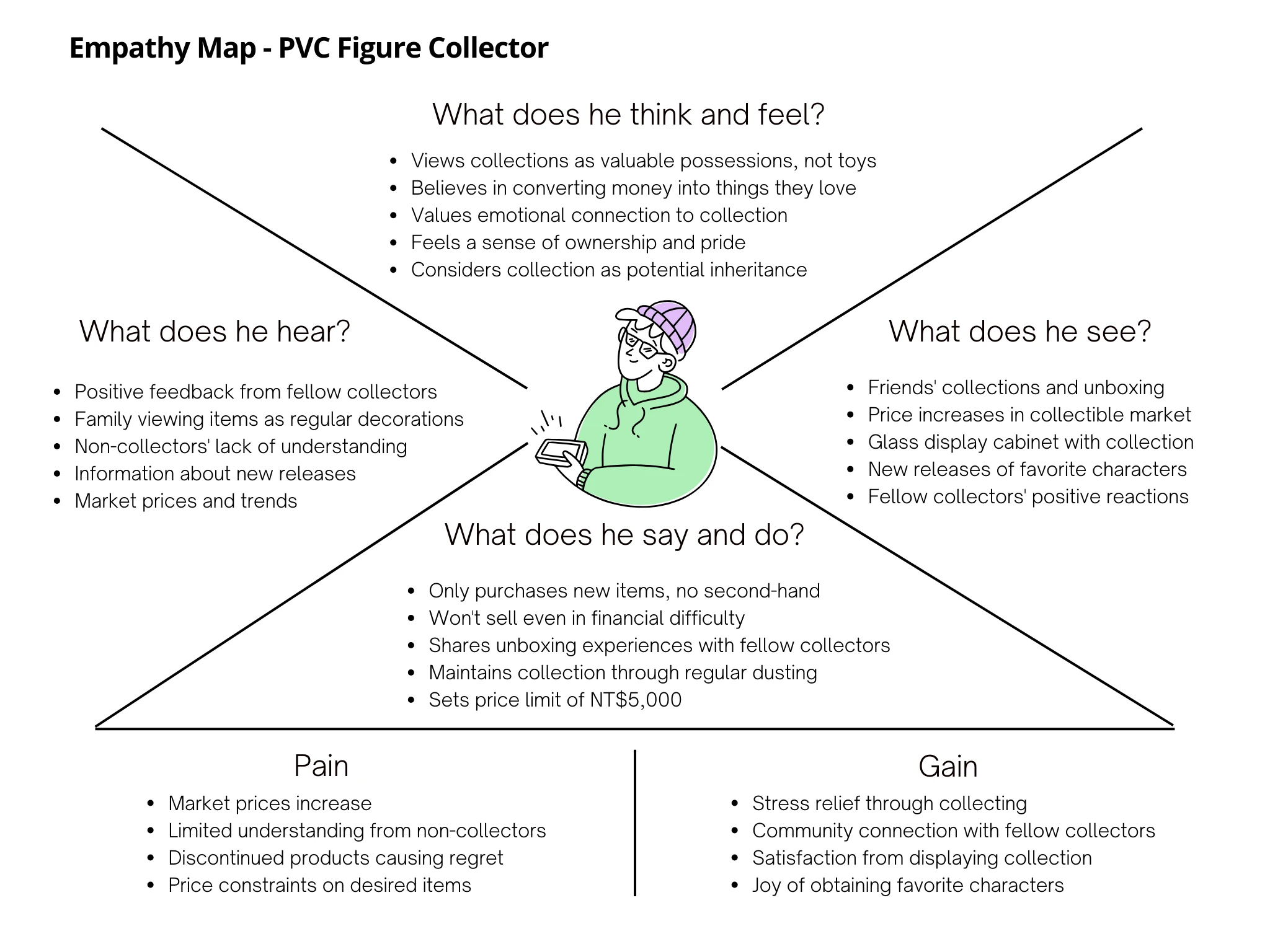
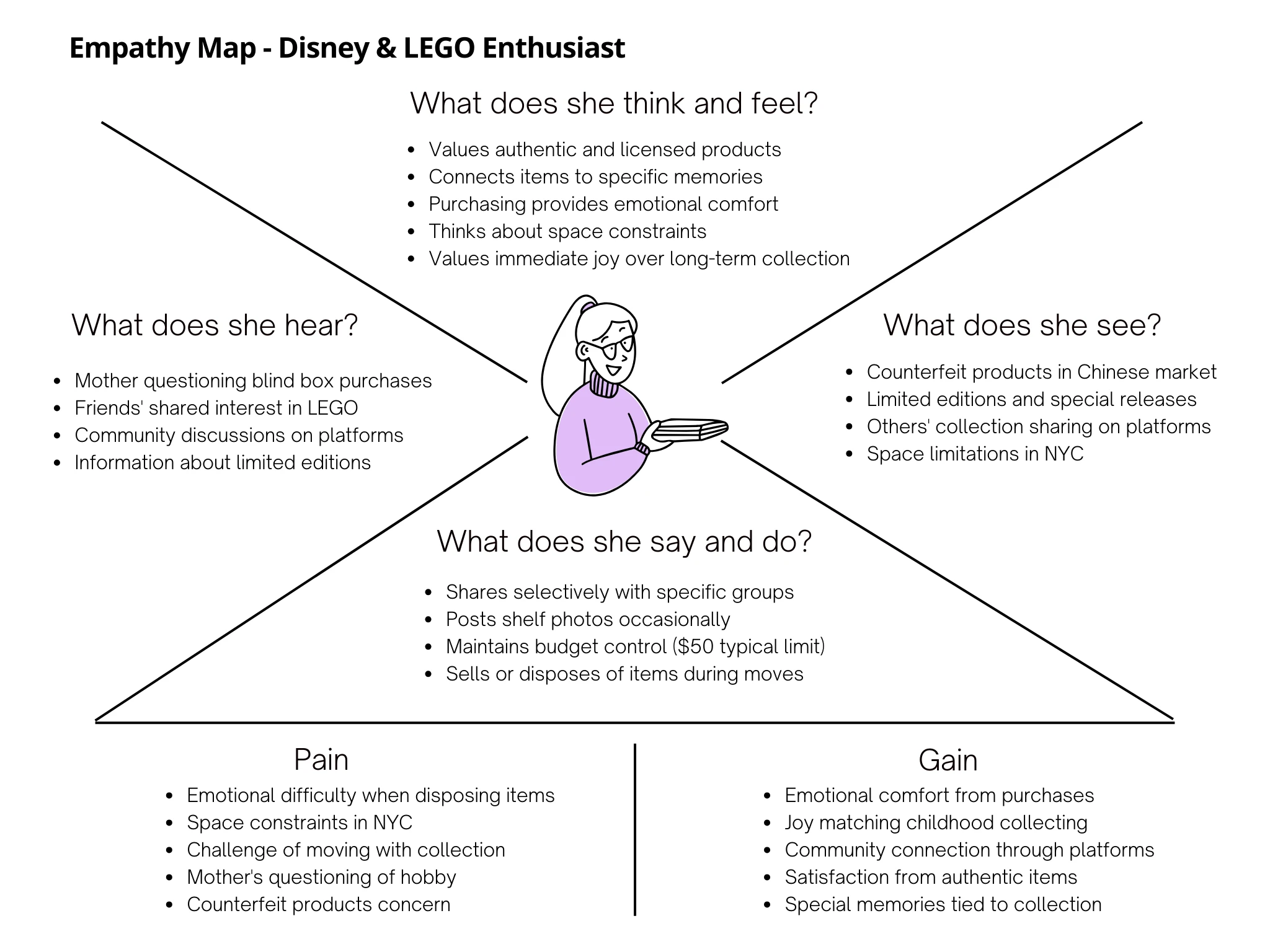
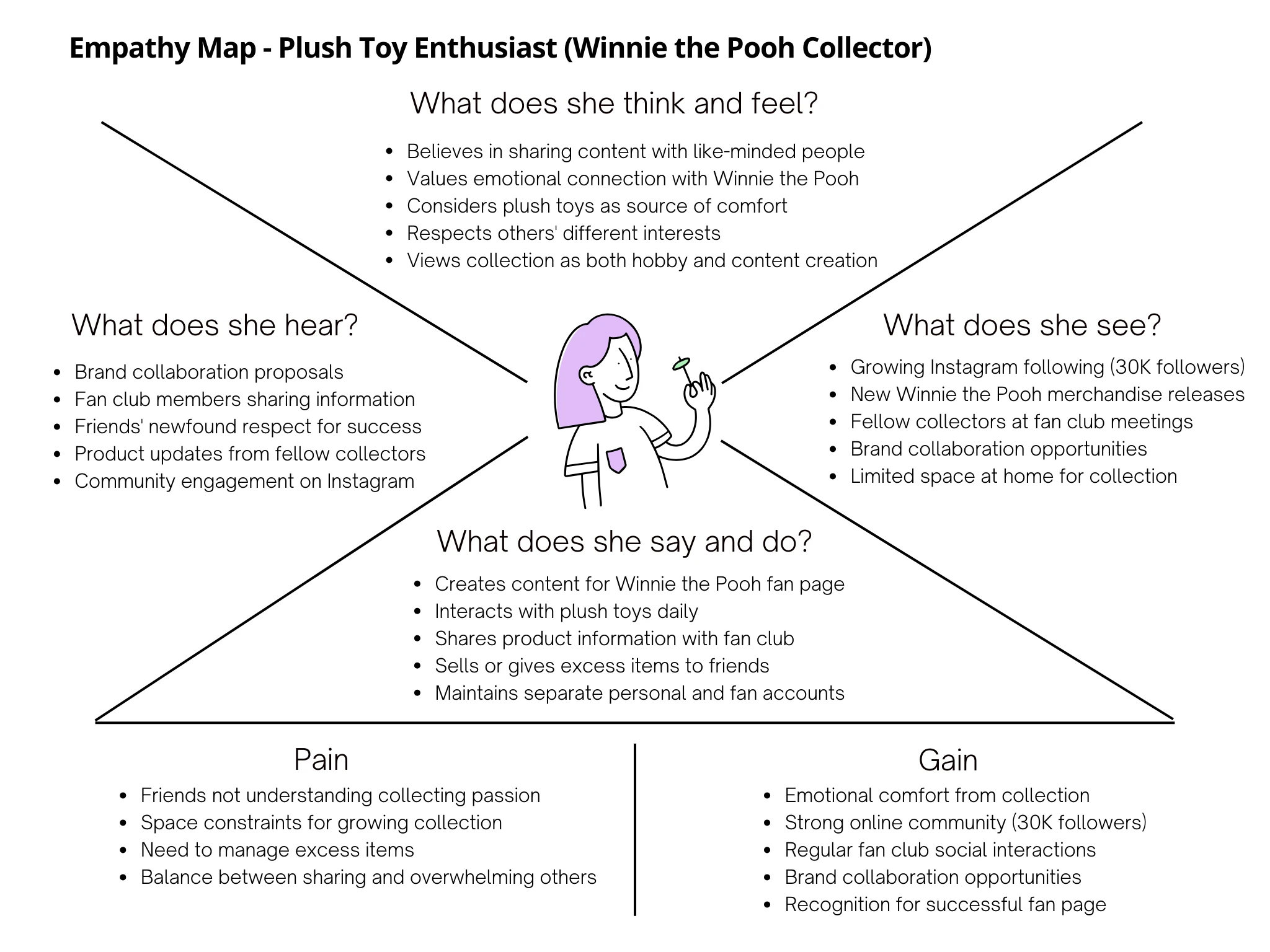
About 30 minutes each with a PVC figure collector, a Disney and LEGO enthusiast, and a Winnie the Pooh plush collector.
33 Survey Responses
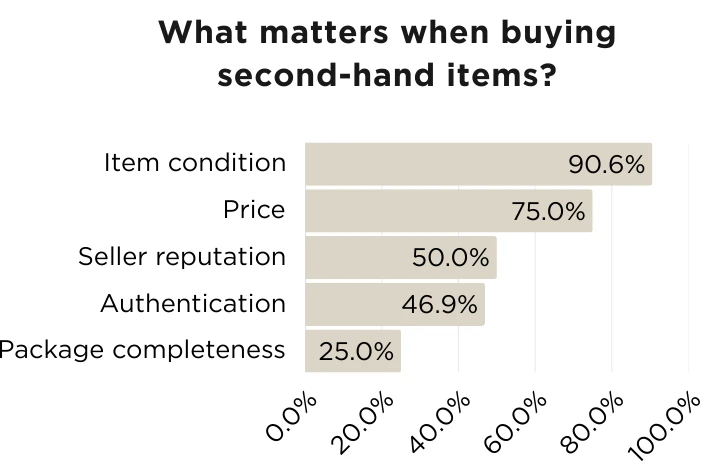
Explored collecting habits, sharing preferences, privacy concerns, and second-hand buying and selling.
Social & Secondary Research
I observed toy collectors, plush toy enthusiasts, idol merchandise communities, and Japan’s ita-bag culture across social platforms. Secondary research explored the emotional role of toys in adult life and how online communities help normalize adult collecting.
Survey Findings
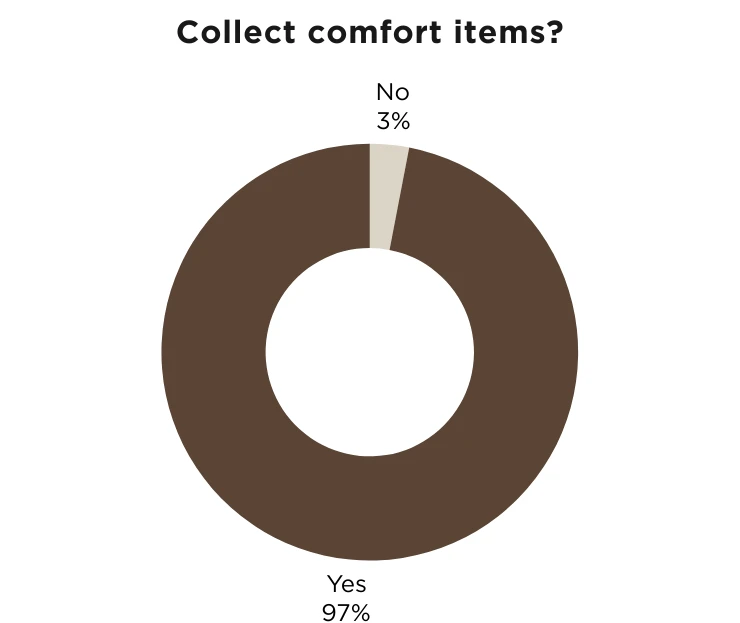
97%
collect comfort items.
34%
have sold part of their collection.
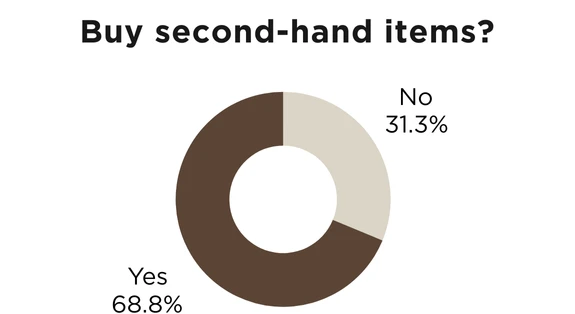
68%
have purchased second-hand items.
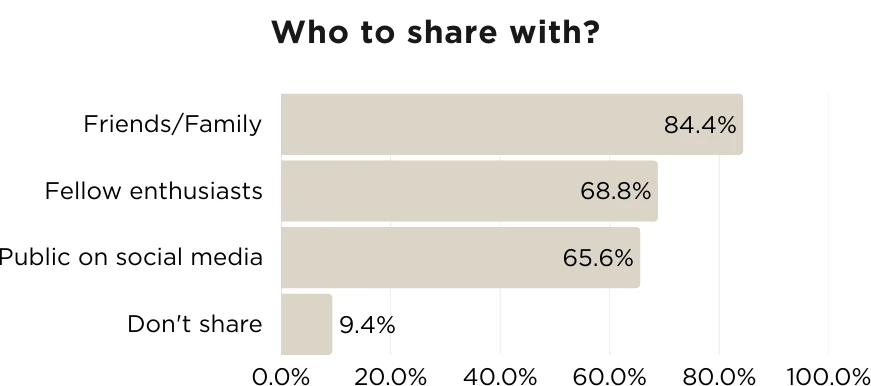
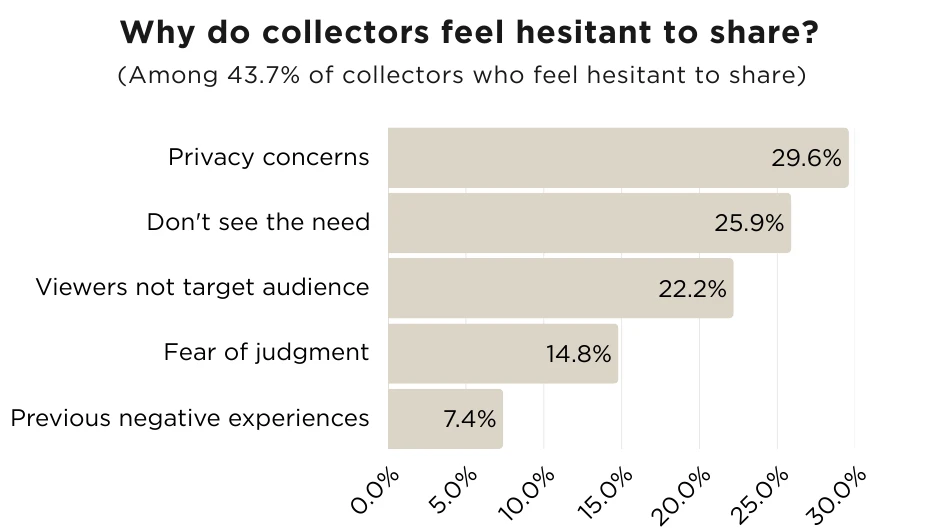
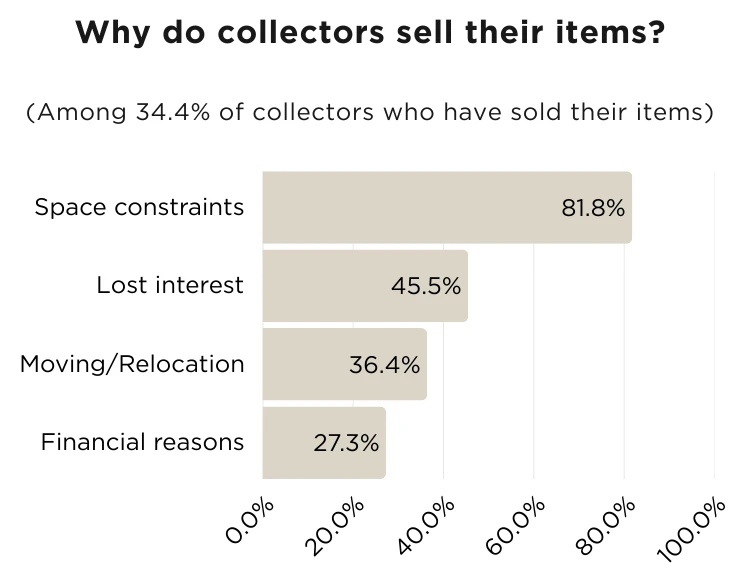
Many respondents enjoy sharing with family, friends, and fellow enthusiasts. Others hesitate because of privacy concerns or uncertainty about who will see their posts. Sellers also face space constraints, changing interests, and relocation.
Empathy Mapping
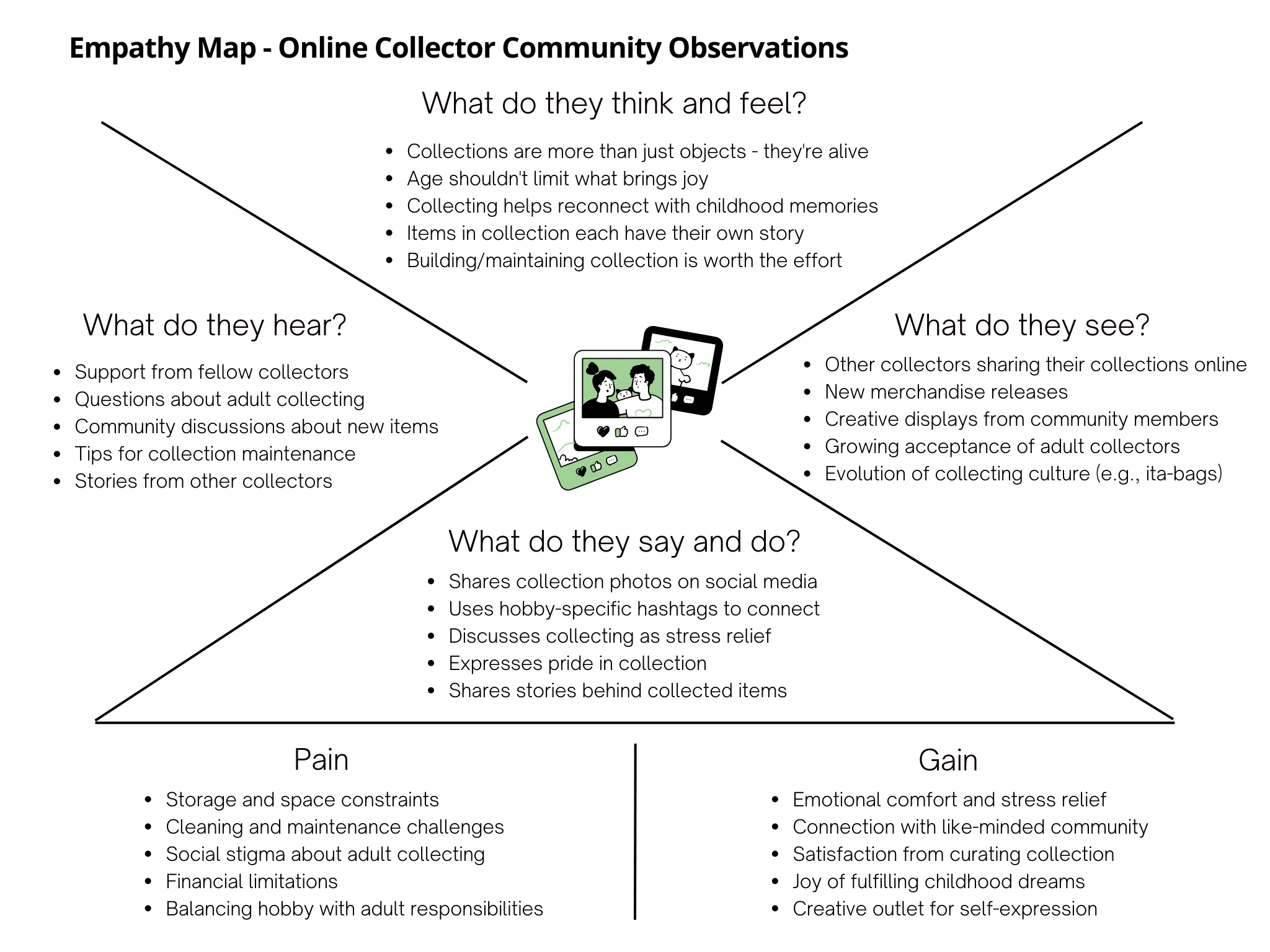
I synthesized the three interviews into empathy maps and created a fourth map from online community observations. These highlighted the balance between emotional attachment, sharing, privacy, and practical storage concerns.
Problem
Sharing a collection should not mean losing control.
Privacy When Sharing
Collectors want to share their collections, but concerns about privacy and unintended audiences can create hesitation.
Stories Lost in Resale
When an item is sold, there is no effective way to preserve and transfer the memories and emotional meaning attached to it.
Design Opportunity
HOW MIGHT WE
Help collectors choose their own sharing companions and preserve an item’s stories as it passes to a new owner?
Stakeholder Matrix
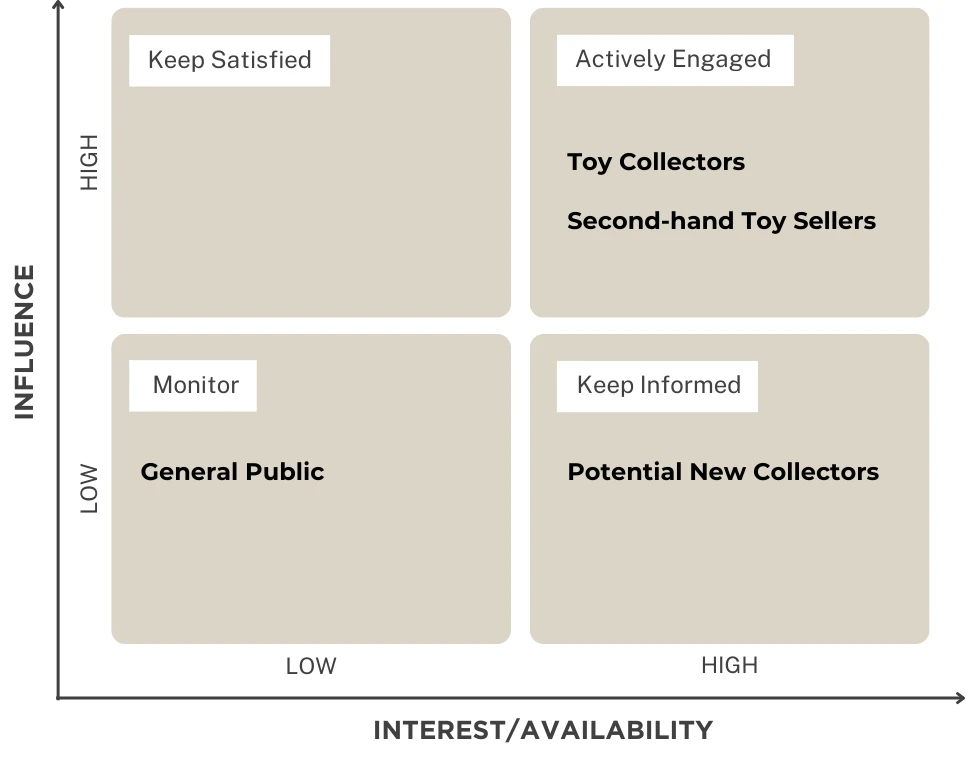
Toy collectors and second-hand sellers were the most directly engaged stakeholders. Potential new collectors and the general public formed the wider audience.
Design Strategy
A personal space for collections and their stories.
Momento brings collection management, customizable sharing circles, and story-connected trading into one experience.
Document a Collection
Give collectors a dedicated space to organize their items and record the moments connected to them.
Choose Who Sees It
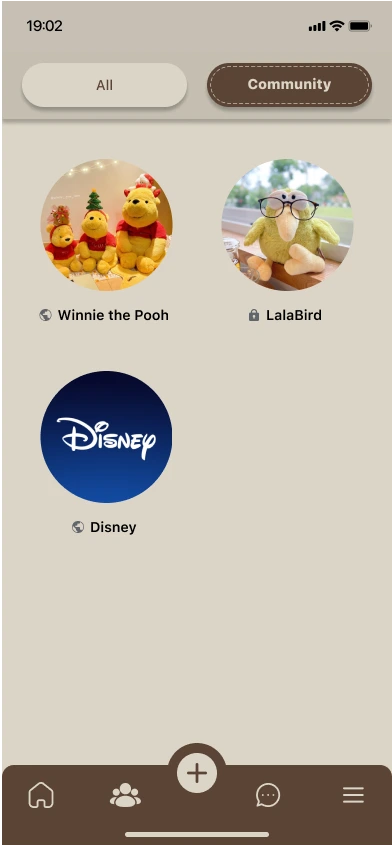
Customizable communities help users share with their intended audience.
Pass the Story On
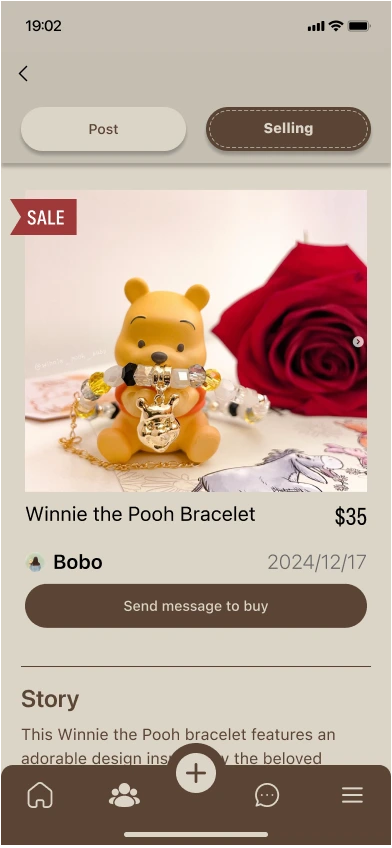
Let buyers learn an item’s history, while sellers preserve its memories beyond the transaction.
Sellers are not just selling collectibles. They are passing on memories.
Design Iteration
From a familiar feed to a personal memory wall.
Low-Fidelity Exploration
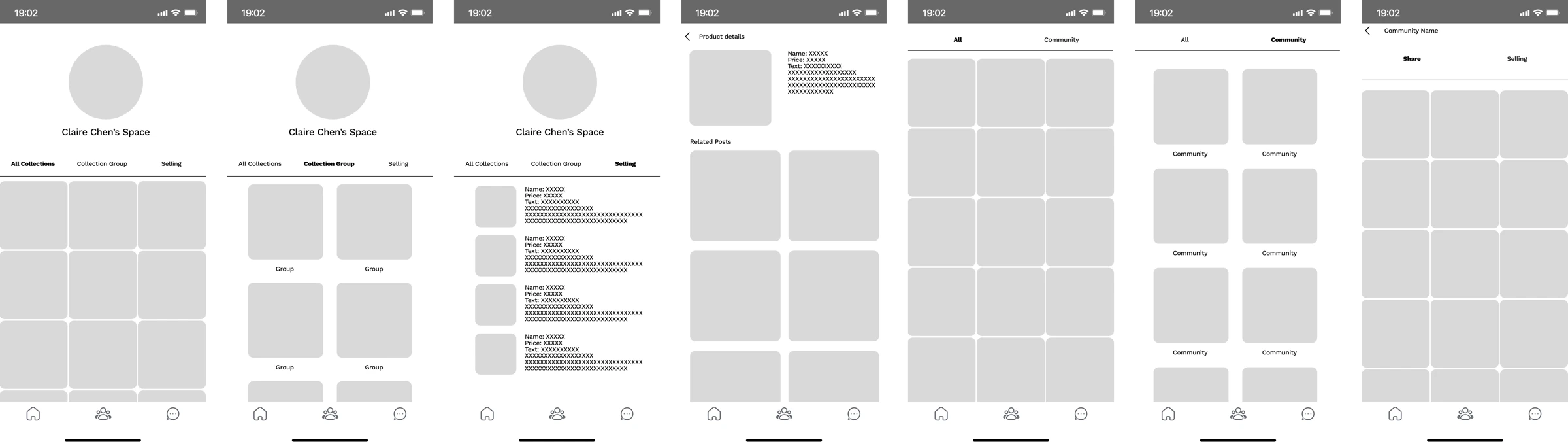
I explored collection organization, category pages, item details, and community sharing through low-fidelity wireframes.
Version 01 — A Familiar Social Layout
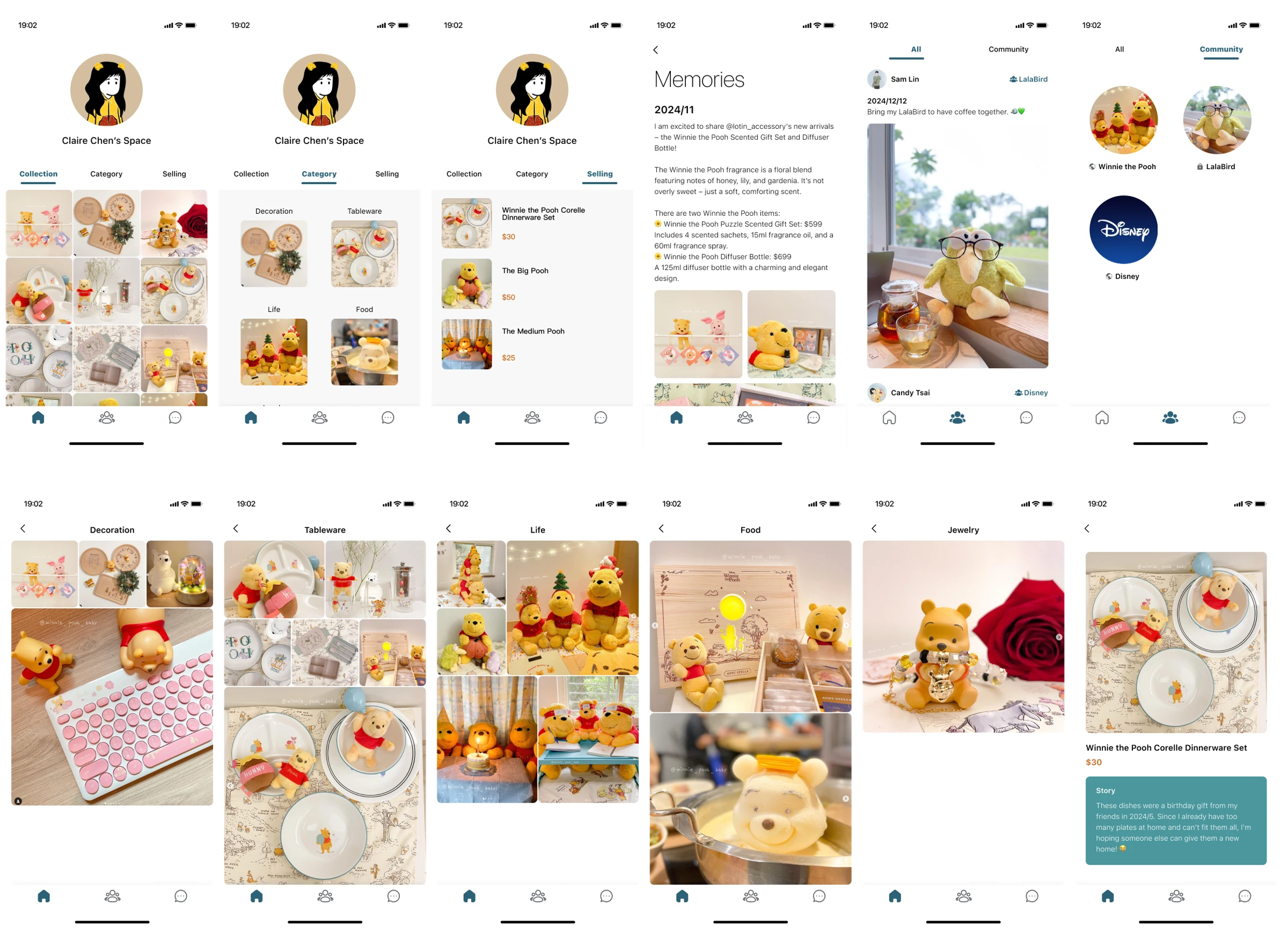
The initial interface used square image posts, collection categories, and community feeds.
USER FEEDBACK
The interface resembled Instagram, leading users to expect a homepage of friends’ posts.
DESIGN RESPONSE
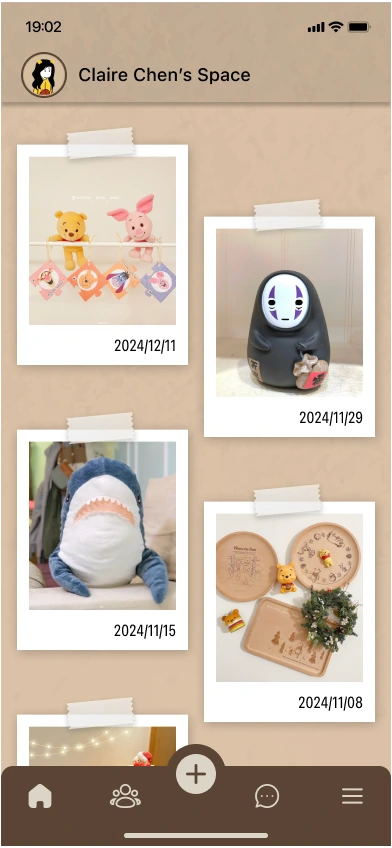
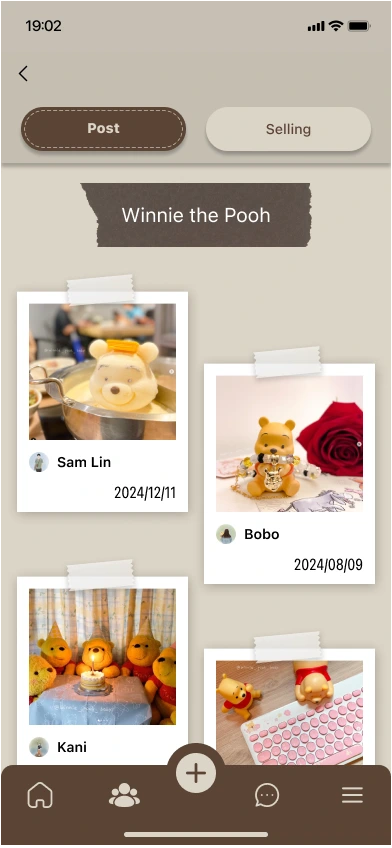
I replaced square posts with Polaroid-style photos attached to a personal memory wall with tape, bringing the experience closer to a collection journal.
Version 02 — A More Personal Collection Journal
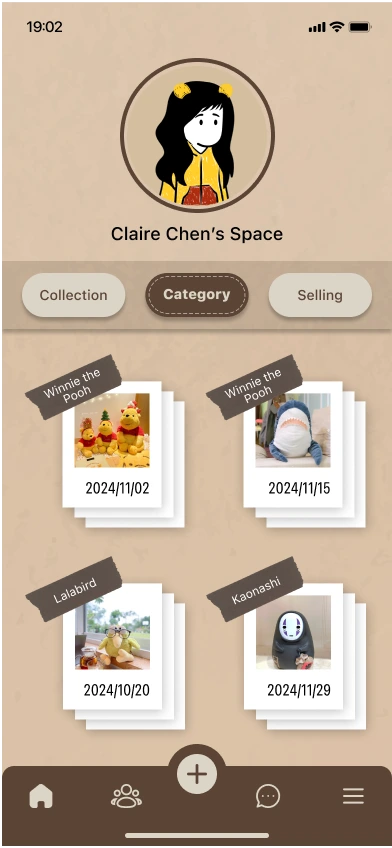
The warmer visual style makes collections feel like personal keepsakes, while maintaining access to categories, sharing communities, and items for sale.
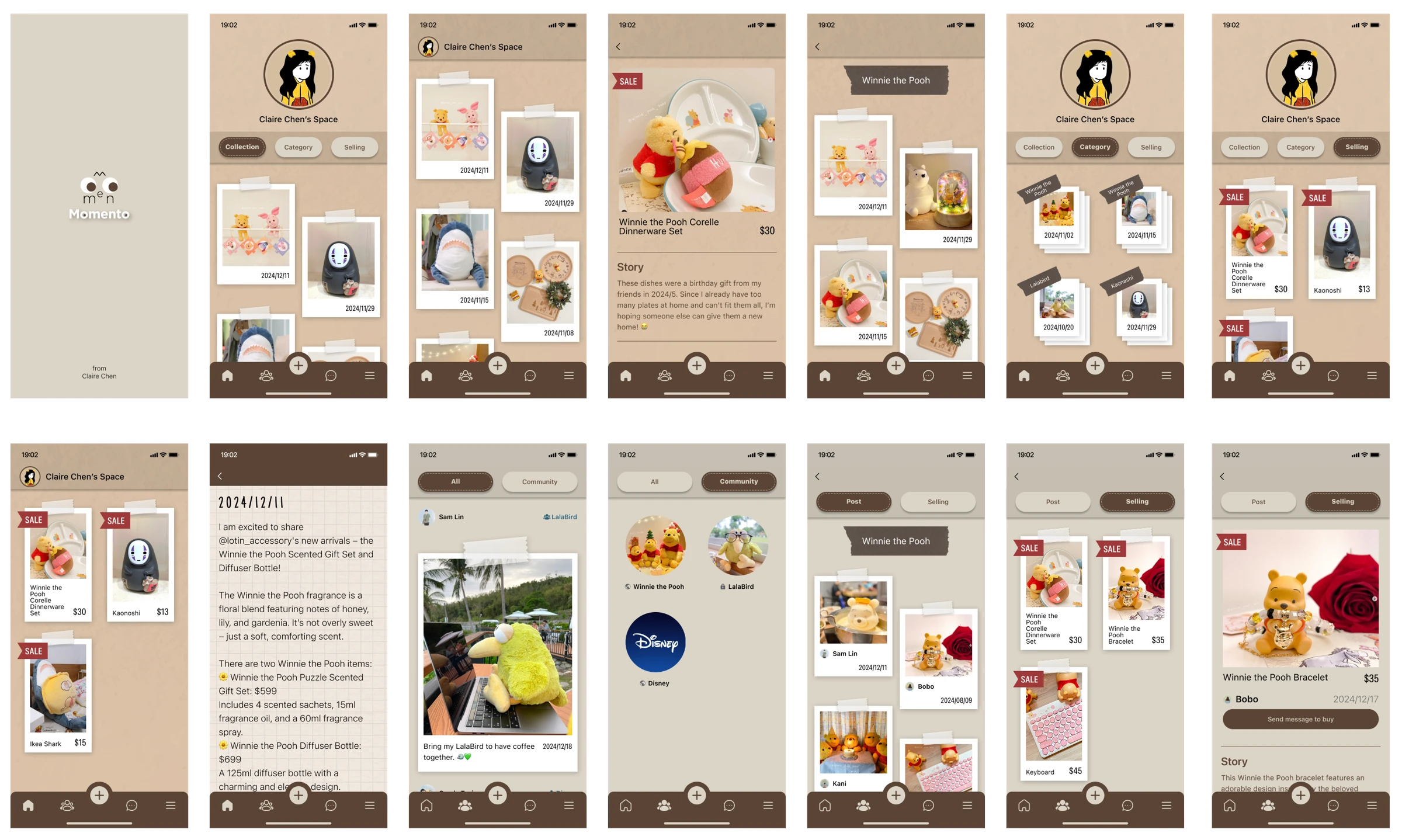
Final Design
A home for the things that mean something.
Momento connects collection management, intentional sharing, and story-preserving resale through a warm, scrapbook-inspired interface.
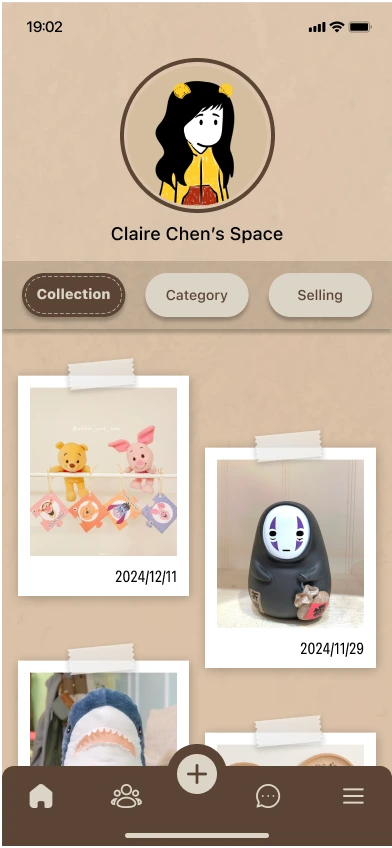
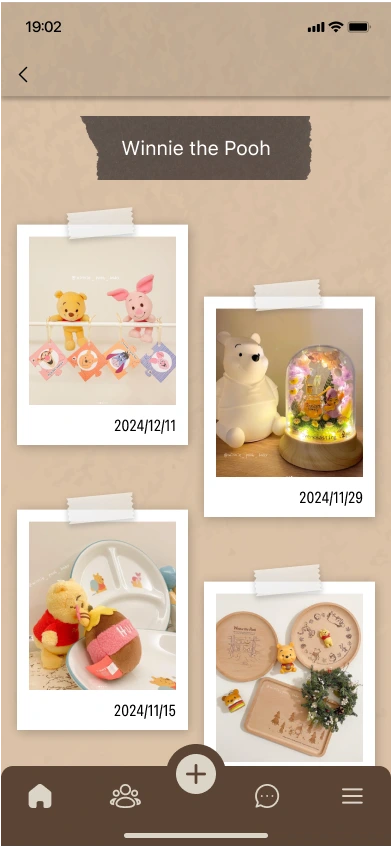
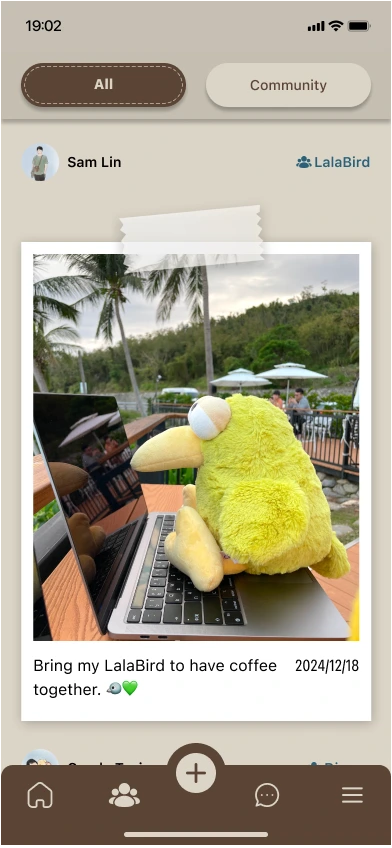
Visual Design
Warmth, comfort, memory, and nostalgia.
A warm brown and cream palette supports the feeling of a personal collection journal. Polaroid-style photos and tape reinforce the idea that each item belongs to a larger story.
A Familiar, Personal Feeling
Collection pages, community spaces, and resale listings share a consistent visual language, connecting practical organization with emotional value.
Competitive Position
Connecting organization, community, and memory.
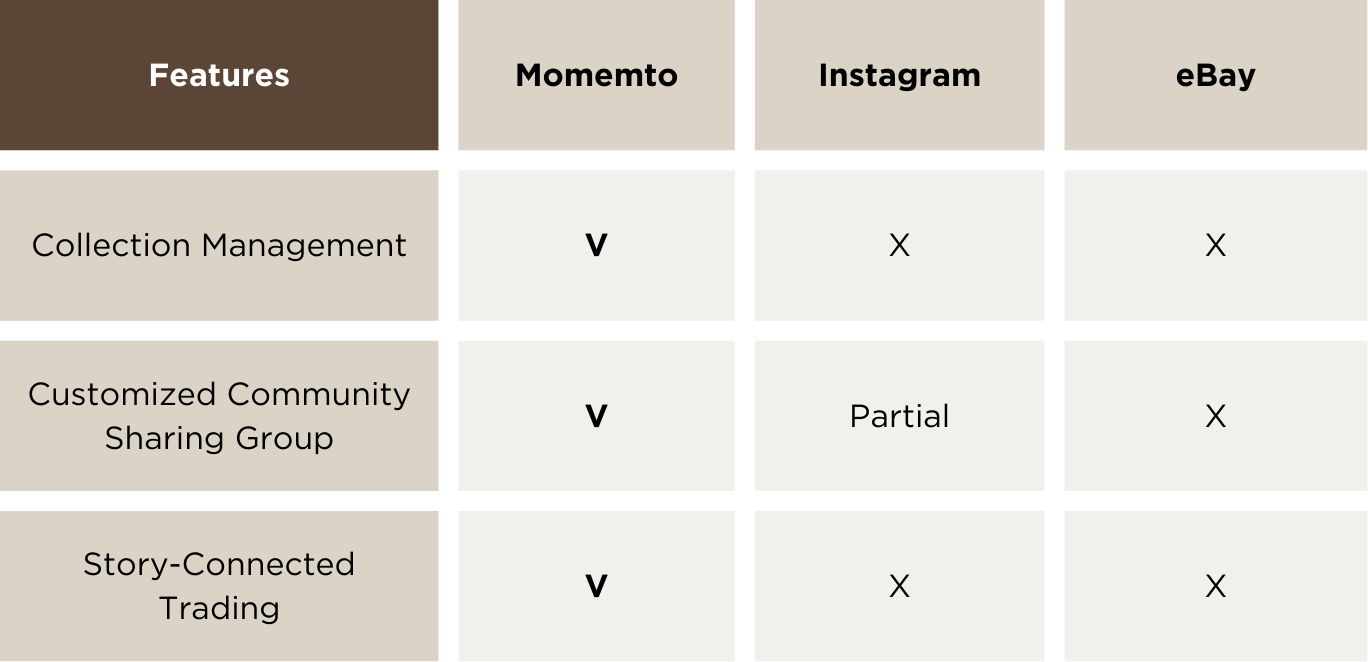
The original project compared Momento’s proposed feature set with Instagram and eBay. The comparison focused on collection management, customized community sharing groups, and story-connected trading.
Takeaway
Let research shape the experience.
Question the Initial Assumption
The research revealed needs that differed from my initial assumptions. Listening to collectors helped me connect privacy, emotional attachment, and practical organization.
Small Details Carry Meaning
User feedback showed how familiar visual patterns can create unintended expectations. Changing the presentation from a social feed to a collection journal helped communicate Momento’s purpose more clearly.
Keep Usability in the Details
Clear navigation, familiar interaction patterns, readable type, and accessible colors are essential, even in a playful and emotionally expressive interface.